"How do you know?"
This is a question my partner asks me almost constantly. For example, this week while driving to Friendsgiving, we crossed into the state of Oregon. I said, "We're in Oregon!" He said "How do you know?" "Signage." "How do you know?" "It said we're in Oregon."
It's easy for me to get extremely frustrated by this because we're often in the same place with the same visual, auditory, olfactory stimuli surrounding us. Its easy to feel mocked by the question as in--of course he sees, hears, smells, how can he not know how I know?
Looking at it in print makes it seem much less mocking.
But I think of it today in response to Della Pollack's article "Beyond Experience" in which she opens by discussing the primacy of the "seen" experience. She discusses the cyclical "I saw it therefore it is and it is because I saw it" which becomes a co-constitutive experiential fortress. You can't question the process of seeing and seen without questioning the "self" that sees the scene. She states is beautifully:
"To wonder about the scene-seen is to risk the stability of the seeing self constituted in relation to it." (638)
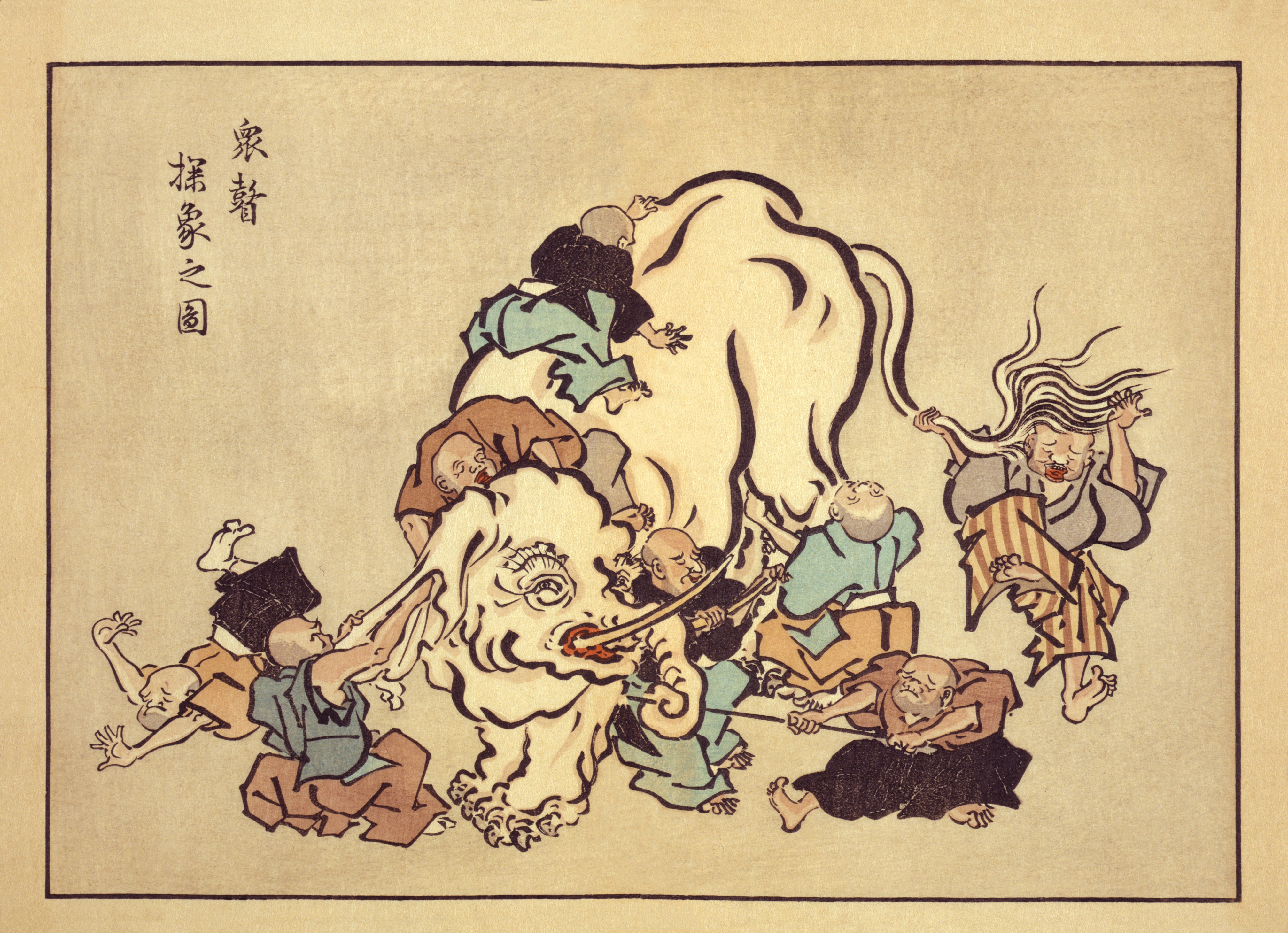
I wonder then about the reliance on what was seen to the authentication of self. When he asks me "How do you know?" and it was clearly seen and then he questions what I saw--I feel defensive because my co-constituted self is questioned. The self that saw something might be wrong if I can't justify or explain how I knew the thing. This troubles me for a couple reasons. First, it places the responsibility of constitution outside of myself and it seems to indicate that the self that I constitute by seeing the world around me is fragile enough in my own conception to feel threatened by questions. Especially knowing that these questions don't actually threaten self or experience but rather seek to make them more available to understanding and discussion. Especially knowing that the seen experience is only part of knowledge and by no means the only verifier of event or experience. Also knowing that multiple people could see one event and report it distinctly--a la the classic elephant example.
When your perception is questioned it's easy to feel that your legitimacy is questioned. Your experience questioned? Your existence is questioned--what are you apart from your experience, your genes, and your choices?
Taking this in another direction, I wonder about Theatre. Theatre is literally the Seeing Place. It's the place that we go to see a story. The relationship of audience to performance is traditionally, usually, mostly that of seeing the play/musical/performance.
The audience makes it theatre because without audience there isn't theatre--is there?
According to Amanda Palmer in The Art of Asking, part of art is sharing and you share with the audience--what is the audience's experience?
Marco De Marinis points out that there are two ways to look at the audience: passive and active. We can look at them as receptacles of our work--"a mark or target for the actions/operations of the director, the performers, and, if there is one, the writer" or we can look at them as active "referring to the various operations/actions that an audience carries out: perception, interpretation, aesthetic appreciation, memorization, emotive and intellectual response, etc" (1).
I prefer the active but many--most productions I see, treat the audience as passive receiver of theatre. If their role is meant to be active, how do they know how to do so? How do they know their job? What is their experience? And do they feel uncomfortable with other roles because those roles question their experience and ask them to do something with it? Does it challenge their self-role as audience?
A director friend of mine once made a comment that as performers we craft a performance that teaches the audience how to respond and that it helps to craft that relationship, experience, and action.
Another director that I worked with didn't understand why I wanted to know the mechanics of the illusion we were trying to create instead of just knowing that we were pretending to struggle. She told me what the audience needed to see--but I was hung up needing to know what how I do that? How do they know that this is happening? How do I do that? How do I create that illusion? What are the elements of the illusion--from my mime training, I remember that illusion breaks down into pieces which all together create illusion.
Because what the audience sees is what is happening--if they see you pretending, they will see you pretending. Illusion is different than pretending.
Mmm... I think I've lost the explorative train of thought. Will think more on this, dear readers.
Thoughts?
This is a question my partner asks me almost constantly. For example, this week while driving to Friendsgiving, we crossed into the state of Oregon. I said, "We're in Oregon!" He said "How do you know?" "Signage." "How do you know?" "It said we're in Oregon."
It's easy for me to get extremely frustrated by this because we're often in the same place with the same visual, auditory, olfactory stimuli surrounding us. Its easy to feel mocked by the question as in--of course he sees, hears, smells, how can he not know how I know?
Looking at it in print makes it seem much less mocking.
But I think of it today in response to Della Pollack's article "Beyond Experience" in which she opens by discussing the primacy of the "seen" experience. She discusses the cyclical "I saw it therefore it is and it is because I saw it" which becomes a co-constitutive experiential fortress. You can't question the process of seeing and seen without questioning the "self" that sees the scene. She states is beautifully:
"To wonder about the scene-seen is to risk the stability of the seeing self constituted in relation to it." (638)
I wonder then about the reliance on what was seen to the authentication of self. When he asks me "How do you know?" and it was clearly seen and then he questions what I saw--I feel defensive because my co-constituted self is questioned. The self that saw something might be wrong if I can't justify or explain how I knew the thing. This troubles me for a couple reasons. First, it places the responsibility of constitution outside of myself and it seems to indicate that the self that I constitute by seeing the world around me is fragile enough in my own conception to feel threatened by questions. Especially knowing that these questions don't actually threaten self or experience but rather seek to make them more available to understanding and discussion. Especially knowing that the seen experience is only part of knowledge and by no means the only verifier of event or experience. Also knowing that multiple people could see one event and report it distinctly--a la the classic elephant example.
Is it a bird? A plane? Superman?--Ironically, said monks are blind.
When your perception is questioned it's easy to feel that your legitimacy is questioned. Your experience questioned? Your existence is questioned--what are you apart from your experience, your genes, and your choices?
Taking this in another direction, I wonder about Theatre. Theatre is literally the Seeing Place. It's the place that we go to see a story. The relationship of audience to performance is traditionally, usually, mostly that of seeing the play/musical/performance.
The audience makes it theatre because without audience there isn't theatre--is there?
According to Amanda Palmer in The Art of Asking, part of art is sharing and you share with the audience--what is the audience's experience?
Marco De Marinis points out that there are two ways to look at the audience: passive and active. We can look at them as receptacles of our work--"a mark or target for the actions/operations of the director, the performers, and, if there is one, the writer" or we can look at them as active "referring to the various operations/actions that an audience carries out: perception, interpretation, aesthetic appreciation, memorization, emotive and intellectual response, etc" (1).
I prefer the active but many--most productions I see, treat the audience as passive receiver of theatre. If their role is meant to be active, how do they know how to do so? How do they know their job? What is their experience? And do they feel uncomfortable with other roles because those roles question their experience and ask them to do something with it? Does it challenge their self-role as audience?
A director friend of mine once made a comment that as performers we craft a performance that teaches the audience how to respond and that it helps to craft that relationship, experience, and action.
Another director that I worked with didn't understand why I wanted to know the mechanics of the illusion we were trying to create instead of just knowing that we were pretending to struggle. She told me what the audience needed to see--but I was hung up needing to know what how I do that? How do they know that this is happening? How do I do that? How do I create that illusion? What are the elements of the illusion--from my mime training, I remember that illusion breaks down into pieces which all together create illusion.
Because what the audience sees is what is happening--if they see you pretending, they will see you pretending. Illusion is different than pretending.
Mmm... I think I've lost the explorative train of thought. Will think more on this, dear readers.
Thoughts?