Friday, December 25, 2015

How to Keep Writing

I sit here and look at my blank blog page under my title "how to keep writing".

It's an ironic moment for me. I am subject to the procrastination bug--the I haven't written in weeks grief--the what do I have to say--how will I say it--questions and feelings that jump in the way and tell me over and over again that it's not worth it.

One of the hardest things to realize is that these voices aren't other people, they're me. They are me making stories that keep me from writing and questioning the badassery that I am.

This has been one of the hardest things to overcome and to put down in my life. These voices that tell me--this me voice that tells me that I can't win so why even try. 

I read an article today about how to keep writing even when you don't feel like it and the suggestions are good. 

The author suggests that you set yourself up for success by finding a dedicated creative space, by making it your job, by deep breathing and walk taking, by hanging out with other writers, and by feeling your grief over it. 

Every single one of these suggestions has to do with DOING something. You put yourself in a creative space. You put conditions that require it to happen, you move and breath and remind your body that you're still there, you surround yourself with people who also make it happen and when all else fails you sit in it and let yourself grieve. You let yourself feel the feelings so that you can go on. 

Doing something is the only way to quiet the voices.

Doing something is the only way to shut them up.

Somehow when you are actively pursuing something, you can let go because you're holding on somewhere else. 

Does that make you invulnerable? No, it makes you active. It puts you step by step closer to finishing a dream. 

So find a place, make some time, find a friend, and do it. 

Write it, make it, build it, and let yourself love it because you're worth it. I'm worth it. Life is worth it. Art is worth it. 

Saturday, December 19, 2015

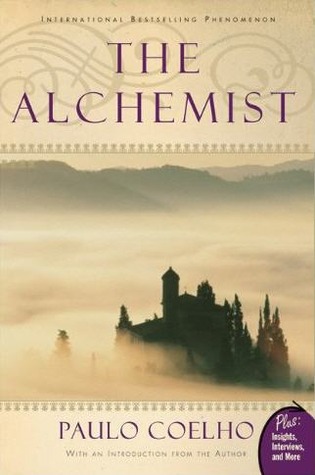
The Alchemist: I have finally read it

All right, folks, this is not a drill. I have read The Alchemist by Paolo Coelho:


What a killer story. What a truly killer story.

What is this story about? This story is about Dreams, Listening to Your Heart, and learning the Universal Language. It's an unapologetically idealistic, mystic story about the battle against fear that keeps us from so many things. It's about the way that we choose what narratives we listen to. It's about the way that every step towards a dream, round about though it may be, can be enjoyed because we know that are pursuing something close to our heart. It's about honesty that hurts. It's about love that starts from the self and spreads outwards.

Ok, I could keep gushing and get more and more florid with my sentences.

But when we get down to it, we have a youth who has the same dream two nights in a row and, in the process of trying to find out what it means, meets a guide who sends him on a journey of thousands of miles.

This story actually is a perfect fit with Joseph Campbell's Hero's Journey.

Exhibit A

He receives the dream--a call to adventure--and a supernatural aid, in the form of a king who gives him two stones for asking questions (spiritual aid) and who guides/guards the threshold. Then, when the youth sells his flock and turns over a 10th of that flock (tithe anyone?) to the king--he is sent across the threshold into the unknown in search of that adventure. It is the beginning of transformation--a transformation which becomes literal towards the end of the story when he is asked on pain of death to transform himself into the wind. He faces many challenges and temptations on this fairly simple journey--the dream is that he will find treasure at the Pyramids in Egypt.

But the true treasure is in the journey itself. It's in the transformation of self and purpose that he gains from going through it.

One of the biggest things that this story has me thinking about is fear and dreams. And listening to your heart.


I often have a hard time listening to the voice inside me that whispers from my own heart. Like the youth, I often feel that my heart says horrible things. I reframe the words and have a habit of not acknowledging that they come from myself--but the alchemist/spiritual guide that the youth meets late in the book tells him that the heart not only speaks in love but also in fear. But that if you listen to it carefully you will learn to tell the difference of fear. You will learn to understand the things that you heart says to you.

I love this advice. This wisdom?

I love it because it doesn't meet out punishment. It doesn't say "ah, fear, my strong friend": you listen because then you understand. You will understand the difference between the fear and the dream.

For me, the fear is loneliness--I've spoken about it a couple times in reference to the dissertation. It's not even really being alone that is the fear but the overwhelming feeling of loneliness. As the book notes, the fear of suffering is often worse than the suffering itself (exhibit a: when I got my ears pierced). The fear that I will not be alone but FEEL alone.

So what is the advice he gives?

Pursue the Dream that your heart whispers about. Don't let the whispers fade before you act on them. ACT on them.

It is the doing of them that makes them real and that quiets the fear.

Even if you die in pursuit of the dream, every day leading towards it will have been worth it.

This book was just so good and so achingly wonderful to read. I finished it and I went for a run. Because I want to move. I want to move so much!

Hence my Practice as Research love: the knowledge you gain through motion is so fascinating and powerful for me. The knowledge you gain through writing.

So what's the take away?


  1. Listen to your heart until you know the dreams from the fear--journaling and meditating are great methods for this. Be brave enough to ask those questions and sift for the answers. They may not be the ones you expect. Be honest.
  2. Move/Act/Run towards your dream--no matter what it is. This is where the other narratives come in and say it isn't good enough, it will hurt, you'll feel lonely, you'll never make it. This is where you do it anyway.
  3. Live and Love in this moment--because, when you live this way, every moment is beautiful.

Friday, December 18, 2015

On Art and Community, Or the Argument for Communes

Today I want to write a post about community.

Writing a dissertation is hard. The hardest part? It's mostly alone. Well the writing part. I got lucky and got to do my research by producing and directing plays--yes! Working with artists. Best decision ever. But the writing part has got me mostly on my own for two years and they've been some of the hardest working years of my life!

Mostly due to the loneliness of writing my work down all alone with little frame of reference and an unhealthy dose of sheer terror in regards to sharing my work with others who may have done a lot of more different kinds of research than me. The Academy is very good a instituting fear of failure.

Having now moved into a suburb of Seattle--even further away from most people/communities I know--I can tell you now that I CRAVE community for my art. All kinds. Not having people physically present is not only lonely, it is demoralizing. It is draining.

It makes me think about transcendentalism... Yeah, that's right. These guys:

Yep: These guys =D and Lady.

I love them--You've got Henry David Thoreau and Walt Whitman. You have Amos Bronson Alcott. And, of course, Granddaddy of bad: Ralph Waldo Emerson of "Selection from Self-Reliance" fame.

These guys were the idealistic social reform hippie bad boys (and ladies) of mid 1800's America. They were into nature, wrote poetry, created social reform communes and experimented with how to live better lives. They set up journals and schools. They wrote essays and lived alone in the woods (in each other's backyards). They were a little weird and New Englandy--but hey! They believed that people could be better and tried to figure out how to do that!

They believed in struggle of the persistent human spirit. I was really fascinated by the togetherness of it. Striving, not just alone, but also together because they believed in Unity of human spirit, world spirit the transcendent nature of reality.

I think of them now because I am in the midst of serious longing for community of artists. And I am reminded of Nathaniel Hawthorne's Blithedale Romance. Hawthorne is considered by many a black sheep transcendentalist--according to my professor. He along with author's Melville and Poe wrote in a bleak and opposing style to the transcendentalists--but Nathaniel hung out with Emerson and the others for a while. And his Blithedale Romance is thought to be based (loosely) upon his own time on one of the transcendental work farms (read commune!).

Now, the Blithedale Romance is not a happy story:

Cheery

In the Romance, the main character falls in love with a charismatic woman who's in love with a creepy charismatic and ultimately evil, culty guy who kidnaps a whispy gamin of a girl. And to top it off, the woman dies and the main character does not in fact get better at his art by performing menial farm labor close to the giving earth mother. 

Ok. I'm severely simplifying.

But the point is, it's a rather satirical look at the who commune idea. The wonderful people with lovely ideals find that their lovely ideals fall apart in the face of human entanglements. Of course human entanglements. Of course drama. Of course things come up with you live closely with others. And inflexible idealism can make that hard. 

However, I am not reminded of this story because of it's failure. I'm reminded of it because of the togetherness. 

Communes--Co-ops and other group endeavors--at least in my experience, do not last forever. This makes sense to be because the people in them are constantly changing and growing--their relationships and needs change and grow. But the time that they are together is something really special. 

I'm getting farther afield from both the transcendentalists and from Blithedale. 

Perhaps I'm going somewhere nostalgic, but the best things I remember doing were things that we did together. 

Like Cute Fluffy G*Damn Ducklings!

I think that's why artist houses, artist groups, artist collectives are so common (that and the ridiculously low wages that people pay for work that is SO TIME CONSUMING!!!).

Cheese: It is not good for man--woman--artist--person to be alone.

Social creatures. I like to be surrounded by collaborators, workers--whether we're working together or not.  This may have been influenced by my 22 years of school >.> [almost a doctor, almost a doctor]. But it is also influenced by my favorite experiences--Shakespeare festivals, Leadership conferences, Trumbull house, Underground, Honors Dorm, Dorms in General, Cousins at Christmas. 

I am reminded of the atrophy of not being near others in a living situation by Notes on a Scandal (not the movie--the book!). Zoe Heller has this amazing poignant line written by this aged school teacher who lives alone and is on intimate terms with no one. She writes:

"They don't know what it is to be so chronically untouched that the accidental brush of a bus conductor's hand on your shoulder sends a jolt of longing straight to your groin. I have sat on park benches and trains and school room chairs, feeling the great store of objectless love sitting in my belly like a stone until I was sure I would cry out and fall, flailing to the ground." (197-198)

She is talking about human connection--the need that we have of it. So deeply to love and be loved--not just in a sexual way but in a nearness. Proximity and the ability to love on each other and be loved.

I think this kind of connection and sharing is vital for artistic generation. At least for myself. There may be other artists who thrive on solitude (Thoreau certainly did--and Emily Dickenson didn't do too bad either) But Emily had a thriving connection with other artists and thinkers through letters. And Thoreau brought his laundry into the house to hang out with Emerson once a week.

The differences are generative. The support essential--especially in our contemporary milieu: an environment that teaches us that artistic risk and aesthetic failure are weakness. That the work it takes to create art is non-valuable in terms of money unless it fulfills a certain criteria.

I'm going to write about this some more. Think about this some more. This is a pretty general post, so we'll get into some more.

I have a great book to respond to on it call Against the Romance of Community. Part 2--Community the RomCom--coming to a blog near you: