Tuesday, October 24, 2017

There You Are

I grew up with a religious story or ritual: When you are in distress, pray to God for guidance and then flip open the pages of your Bible at random. You will find what you need.

This never really worked for me. I would be distressed about a boy and flip open to Levitical food laws. I would be worried about a test and flip to the description of the beast in Revelation.  Grieving over my grandfather's death, I flipped to the story of Lot's wife.

Some might argue: there's still a message, the ways of God are mysterious, do a little more research it's there.

But I've found non-traditionally religious literature to be far more reliable.

Tonight Annie Dillard stops me, mid-paragraph, with a quiet, awkward, sentence. Call it serendipity. I opened a book and a quote caught me like a salmon leaping upstream.

In Pilgrim at Tinker Creek, Dillard says:

"What we know, at least for starters, is: here we--so incontrovertibly--are." (130)

I stop because, of course, of course, we are. 

Let me situate the source of my frustration: I have been learning again, taking a conservatory of physical theatre for actor-creators. 

In class, we did an exercise in the neutral mask in which we have to be the ocean and move through it and wash onto the shore. 

The neutral mask is a mask of total presence and total ease. As one of our instructors put it, the mask tells you "you can do it." It isn't excited about that fact or afraid of that fact. The mask isn't worried about failing because it won't fail. Everything is ease and everything is unique and everything moves past without catching hold. 

This is both a beautiful gift and a big fat curse. The human is constantly experiencing emotions which slide through and over and into and out of the mind and, so, the body. By this I mean, I experience those things. By putting on the mask of ease, I am offered the gift of total presence and ease. Because it is a mask, it reveals the human flow of energy and experience that writes itself on my body. 

As I think about this and mull it over, I am at turns excited and daunted--my human bits roil up and down like a sine curve. I am reminded of zen. The mask is the moment of zen, the practice of waking up to remember that you are always, already present and that nothing more is required of you. You can experience this present moment fully and let it go. Then I am daunted because I realize that when I put on the mask: it is a practice to which people devote their lives. The mask is a master; I am a novice

Back to the ocean, I could picture it, feel it, sense it, hear it in my imagination as I waited my turn. Then I put on the mask, full of excitement. I turned around, making sure to breath in and out like the ocean, I let my arms drift and lift with awareness and I looked at the world around me. The fish, the kelp, the waves--I was told to turn back around and take off the mask. 

"You're a person, in the sea, looking at the sea. You need to be the sea."

What. 

"Breath it."

Yeah, ok. I put the mask on and the sea was gone. I heard that I couldn't look at the sea because that's a person looking at the sea. So I retreated to gesture and what felt like avant garden dance. I didn't see the sea I heard my breath and moved around the stage trying to follow the breath. I felt like fool.

Taking the mask off, I was told "There were moments." I believed it, having seen it in my classmates, and I still didn't understand it. 

I tried again and again and again and never made it through the sea to the beach, always I was stuck in the water, trying and failing to be a sea I could no longer see. 

It was an incredibly frustrating experience. I kept trying, anxious to put the mask on, anxious then to take it off, anxious to try something else, still seeing nothing until a blinding headache plopped me in my seat watching my classmates struggle as I had. 

I have several thoughts about the exercise that have been rolling in my head since we spent what felt like an eternity trying and failing to do those things.
  1. It is an impossible task to be an ocean. It is so very hard to try to think of the ocean and yourself and yourself and the ocean as one and the same when someone is telling you over and over that you just aren't big enough. Because obviously. Obviously I am not the ocean and obviously the ocean is bigger than I am. 
  2. The impossibility of the task does not strip the task of meaning. In trying to do it, I learn something.
  3. Letting the breath move the body and then stilling body and breath is the most effective way--that I saw--to move from the ocean to the shore.
  4. Trying to be the ocean or the shore is as sure a way to fail as not trying to do it. The harder any of us tried to be the ocean, the less ocean we were.
  5. Ease. There is ease in the ocean, even in it's wildness, depth and richness.
  6. Ease. There is ease in me, even in my wildness, depth, and richness.
  7. After all, I am--incontrovertibly--here. 


At the end of the day, I am brought to the conclusion that I am learning to recognize and allow my own presence in the here and now. To be the space, I have to first be comfortably me. It's so funny to me that the incontrovertible fact is the one that I work so hard to know and do and be.

When frustration is happening, there is a nugget of wisdom or knowledge being pressed into existence. 

For starters, Dillard says, we are here. 


Sunday, May 28, 2017

The Cult of Authorial Intent and the Power of the Interpreter Part 1

In November 2016 the Dramatist's Guild published an open letter in defense of authorial intent in playwrighting.

There are several issues at play here. One being the casting of white actors in roles of people of color, notably Martin Luther King Jr. in Kent State's Production of The Mountaintop by Katori Hall and Clarion University's production of Jesus in India by Lloyd Suh. "Colorblind" casting is a very particular issue which contains a huge and nuanced discussion of power, bias towards white performers and stories, as well as the systemic oppression and appropriation of narratives, cultural elements, and bodies of people of color in America.

The integrity of authorial intent is a second issue which contains a huge and nuanced discussion about the nature of collaboration, the distance between collaborators, and the most valued portion of performed narrative (text vs mise-en-scene vs performed bodies etc).

These two discussions being linked is tough for me because both are so complex and nuanced.

I really want to make this two blog posts! Because such important and nuance topics!!! But as American Theatre and the Dramatists Guild have linked the two issues, I feel that I want to address them and their relationship within at least one post. Edit: I'm making it more than one blog post.

These two topics are in conversation out of necessity because the roles that are being given to white performers are roles written by playwrights of color for performers of color in order to address the those stories.

I have to admit that I am a white American--though I have always been extremely conscious of the immigrant source of my family on one side from eastern europe--I am visibly white in America. That means that there are a LOT more roles for me than for actor's and performers of color. I am also a female performer, which carries it's own dearth of roles compared to male performers. I am a director, actor, writer, and scholar. So my experience crosses a broad range of making, viewing, studying, and discussing theatrical narratives.

I have two responses to these that I want to explore--
  1. Authors are not gods and they are not the sole creators of a theatrical production--They are collaborators to be respected and included when possible. 
    1. This said in the modern world, this kind of collaboration is at times tough to accomplish due to distance, how busy a given playwright is, dead playwrights with estates, etc etc
    2. Collaboration is also tricky--what does collaboration entail and when is it just better to write a new script or production to explore the idea?
  2. "Colorblind" has come to be a short hand for "We're not racist." If you're selecting to do a play with characters who are not white, don't go casting white actors because you "didn't have enough actors of color" "didn't have the right ones" "thought the experience was universal" or otherwise did not consider how the white performer is usurping this narrative and erasing the bodies of color from this very visual stage. Because that shit is a violent appropriation.
    1. Color Conscious casting and storytelling is important
    2. Engaging with the cultural milieu is important
    3. Avoiding censorship is important
    4. Actively discussing these issues is important
These two issues intersect because of power politics. Playwrights of color having their works appropriated and filled with white bodies when the plays were deliberately written for non-white bodies is part of the power web in which white bodies take what they want without consequence. Find here a brief primer on appropriation

Making space for these stories and these bodies onstage is important because traditionally and contemporarily, there aren't a lot of spaces where these bodies are prominent and where their stories are told. 

That's where it gets thorny and prickly when white artists complain that if it's universal or if they don't have the actors they can still tell these stories. Because there are PLENTY of stories out there that white artists can tell and that call for white bodies to fill them onstage. When a writer of color deliberately writes a play about people of color and white people decide to produce it and fill it with white bodies, these white productions have co-opted the story and fundamentally used it to take space away from the people who created it.

That's a problem. I say again. It's not okay.

This brings me again to the term "Colorblind". There is a cult in contemporary culture of protecting white people's feelings. The big example that is relevant here is the response to "hey, that was racist". When someone tells a WP that something they said or did was racist, the response is generally along the lines of "I didn't mean, I'm not racist, You can't possibly think that I'm racist, You just didn't understand, you don't know me well enough, etc, etc, etc". This has led to the term White Fragility which covers the way that WP, when uncomfortable become defensive and recenter the conversation and to themselves (see above: "you don't understand what I mean't").

You can see that in the above productions when excuses are made for the problems the production faced: "I didn't have enough or the right actors of color" or "the things in this play are universal" both center on rearranging the discussion to the white problems or point of view.

Let me break that down. The first two responses: "I didn't have enough actors of color" or "I didn't have the right actors of color" reframes the conversation in terms of the white producers problems and makes the solution reliant on the inability to see POC. POC protest saying: you have stolen one of our stories and the opportunities for us to perform and tell those stories. And the response has nothing to do with the issue. "I couldn't find enough actors of color" skirts the issue by erasing the visibility of poc performers and their protest. This is also victim blaming: POC point out: you've hurt us by taking this story and the roles. The white producers say: "It's your fault because I couldn't find any POC to cast anyway. I was just trying to solve to problem of not being able to find you".

The second response which claims the narratives as universal centers the white POV as the universal and so reinforces the hegemonic oppressive power structure that the white experience is universal via claiming all experience as it's own. It, again, ignores the distinct experiences of people of color by white washing them, invalidating them under the umbrella of "universality".

My tirade above is not in any way meant to stop production of these shows, but if you're going to produce them, you should also be willing to do the work on them. When you produce Shakespeare, you do dramaturgical work to understand the play. When you do a play like How I Learned to Drive, you engage in a complex issue that requires some specific work to engage in the issues of incest and abuse. So, if you're going to do a work about POC or a work that has issues of racism or oppression or includes the stories of POC, don't just assume that you a white production team already knows everything or that you can just tell the story. Do the work.

Suggestions:

  1. Do produce these shows. 
  2. Cast artists of color in shows that ask for them. If you aren't able to find "enough/theright" performers of color, don't compromise and cast white people, pass it off to a theatre or organization that can. Go looking, because I guarantee you, the performers are there.
  3. Put artists of color in leadership positions on these shows. 
  4. Recognize that you exist in a racist society and that at some point you are going to fuck up. Be prepared, when it happens, to recognize that the behavior is something you can change but that it's your job to do that work. 
  5. When it happens, don't make excuses for yourself, apologize. 
    1. This sounds like: I'm sorry, you're right, that was deplorable.
    2. This does not sound like: I'm sorry, I didn't mean, I didn't intend, If you saw it from my point of view . . . 
  6. Then make it right. 
    1. This does mean taking appropriate action: recasting, pulling the show, changing leadership, changing the structure to allow for and add artists of color.
    2. This doesn't mean making excuses or finding a way to do your thing anyway.


Monday, November 21, 2016

A Response to "Left's freak out over Trump's win is absurd"

To Cynthia M. Allen;

Your charge last week in the Star Tribune that liberals are responding inappropriately to Trump’s election is erroneous.

There are three claims that I want to address.

First, that the “normal and appropriate response would be to wait until Trump’s tenure has begun and then to hold him accountable for his decisions as president.” To this, I counter that he has begun his tenure. His statements and actions as a representative of the nation have begun as he assembles his cabinet and states his goals. These are decisions that do and will effect this country. In fact, they have. There has been a documented and verified spike in hate crimes committed by individuals who, regardless of their votes, feel both comfortable and supported in their threats and violence against the visible and marginalized in this country. 

You secondly claim that liberals are “Sniveling and whining” which “is not the way to build empathy for your cause.” You assume that the crying and the need for safe spaces is an argument and plea for your empathy. These visible marginalized groups are people that Trump has not only spoken rude and violent rhetoric against, they are individuals who are attacked emotionally, verbally, physically, and, with Trump and those he is beginning to tap for office, legally. Those who are attacked and abused need a safe space not to appeal to your emotions, but to literally protect and care for themselves in an increasingly open and hostile socio-political climate. 

Which brings me to your third claim that the “basic tenets of our democracy [are]—that even if you didn’t vote for the person who wins, that person is still your president.” First this is not tenet (a principle or belief). The person who is voted into office fills that office and this is a function not a principle. The basic principle that allows democracy to proceed is that those who are in the majority (in power) consent to care for the interests of the minority (not in power).  This is something that Trump and his regime have stated that they are deliberately against. Without the behavior of care towards and for the minority and the marginalized, these individuals have no incentive to submit to the authority of a majority elected representative. This leads to protests and political action in order to protect the rights that the democracy guarantees it’s citizens. This principle is a literal requirement for democracy because the the government cannot continue on democratic rule if it does not care for the minority. It instead is forced to become a different kind of government: one that forces it’s control.

This brings me back to the first point. You ask that liberals “Please stop” their behavior and “wait”. You offer to support this request that you are also worried about Trump’s policies and you are waiting. I then ask, what will you do to stop those policies you are fearful of? If you are concerned, how will you actively participate in your democratic duty to hold Trump and his regime accountable for those behaviors since you did not vote for him? There are citizens and individuals in this country in danger from these policies and ideas. While it might not be true to say that every Trump voter voted because they were in favor of racist, sexist, and bigoted policies, they definitely didn’t find these policies to be an impediment as you seem to have (since you say you did not vote for him). And I ask again, what will you do to ensure that these policies are not enacted?

You wrote an op-ed to justify your “schaudenfreude”—a word you chose that translates literally to express your joy in someones misfortune and suffering—forgive me if your fears for the safety of the vulnerable in this society seem hollow.  

Friday, June 10, 2016

You Know What Really Grinds My Gears? Theatrical Abuse


I was talking to some friends about theatre and generally how people get pigeonholed by the work available: actors become yoga teachers, designers become technical directors, directors become stage managers. Not to denigrate any of these positions, but it is difficult (and the subject of another post) to not be able to do the work that you want to do (in any job/position). Point being! This article on Profiles in Chicago came up in conversation. I had not read the article at the time and so knew very little about it except that it had to do with exploitation of performers.

Then I read the article, and HOLY HOT DOGS, BATMAN!

Talk about a goddamn horror story.


Here are the cliff's notes:

Profiles is a theatre company in Chicago with a reputation for excellent, biting, edgey realism. They're in the tradition of Steppenwolf and some of their most famous productions have been scripts by Sam Shepherd and Tracy Letts. These productions have been called "Vicious" because the stage drama, the tension, the violence, everything is so real--they're really doing it.

This is where things get weird and scary. They really were. The violence--mental and physical--were intensely real. The entire company was wound around their primary actor-manager who systematically controlled, groomed, and abused the entire company.

Please read the article for more in-depth details, but know that this involved helping/grooming/sleeping with younger and leading actresses, flash changes of opinion and screaming at actors for ruining scenes, isolating performers, teaching classes and bringing actors into the company from these classes where he could groom them while they were young, and creating un-safe work environments on the ideals of edge-y, hardcore work in a company that 'valued' them and the ever popular--sacrificing yourself for the work.

Performers, Stage Managers, and anyone who interfered or said stop/unsafe was isolated and kicked out. Performers were gas-lit and ambushed. And because they were young and because the theatre was not-equity there was no where for these theatre-makers to turn.

Now, this lights a fire under my ass for a variety of reasons.


  1. Safety. Theatre makers, like any worker--like any goddamn human beings, deserve to be safe in the workplace. This includes things like: recourse for inappropriate behavior, human hours, non-toxic social milieus, 
  2. The disregard for designers and directors--the company made up fictional designers and directors to hide the fact that this actor-manager and his partner were in total control of this company. Making a mockery of the fact that collaboration with multiple artists yields excellent art. 
  3. Cult-leaders/AbusiveGurus--This shit is not ok!! The behavior conditioning that makes you feel crazy for having feelings/opinions of your own, the isolation direct and indirect, the casting of and grooming of young actresses, the abuse of the role of teacher/mentor--THIS SHIT IS NOT OK!!
  4. The Disposability of Actors: The message that is thrown at us from an early time is that if we are difficult, complain, or piss off those in positions of power: We are replaceable. Even the funny "actors are replaceable, props are not" shit. Especially female actors. We are told through the sheer number of us that we are replaceable. No one has time for anything but excellent compliance from us. 

The thing that really fucking gets me is that I recognize so many of these actions and styles of theatrical creation. I have experienced them.

The first time I was cast in a big festival, I played Juliet. On the phone before I was offered the part, I was asked not only if I was comfortable with sexuality on stage, but also if I was a virgin. The actor-manager of this company consistently hired and chased after young women. When we were doing an educational outreach, the back of my Juliet dress came undone while we were all waiting in the side room of the auditorium. I asked for help and he jumped on it and not only did my dress up but also kissed me on the side of the neck. He was the most powerful person in the room and I didn't dare say anything. I'd heard him talk about other actors. I just thanked my stars that I wasn't playing Ophelia to his Hamlet (another show that season) which he was also directing. She had a particularly violent and sexual Get Thee To a Nunnery. The actor-manager's philander-y nature was an open secret. The cast talked about it. He encouraged us to vent to each other at the beginning of the season because he warned us that he was going to yell at us, push us up to the edge of the cliff--but, he explained, it was all in the service of art and we were a family. He made us feel like we were special to be part of this festival.

After this festival, my director was heard to say of me that I was a good actor, I just needed a strong male director.

I have seen friends asked to send nude images of themselves before even attending an audition. I have seen directors who demand that students merely acquiesce to their notes like automatons and then criticize them for having no originality. I have seen directors actively seek dangerous situations and as an actor, I have been willing and excited to seek those situations as well, especially when I was younger and less experienced.

I have seen people who want desperately to guide young actors and give them freedom and help create dangerous situations. I have been in situations where, despite creating incredible art, I did not feel safe or valued in the rehearsal process and I was willing again and again to let someone else dictate to me how far to push it and to jump into unsafe places because I knew I was replaceable, I wanted to get hired again, I wanted to make great art, I believed in the dream.

So all of this really screams towards the question:

How do we create a safe collaborative space for theatre makers here, where we are?

I have worked with many fine performers and directors and collaborators and have several ideas, which hopefully will become further blog posts. But today I want to turn the question out first and ask you readers:

  • What have been the safest collaborative spaces? 
  • What helped make them safe? 
  • How can we work to bring those to environments we are already working in?
  • How can we create safe and collaborative spaces for theatre?

Sunday, January 31, 2016

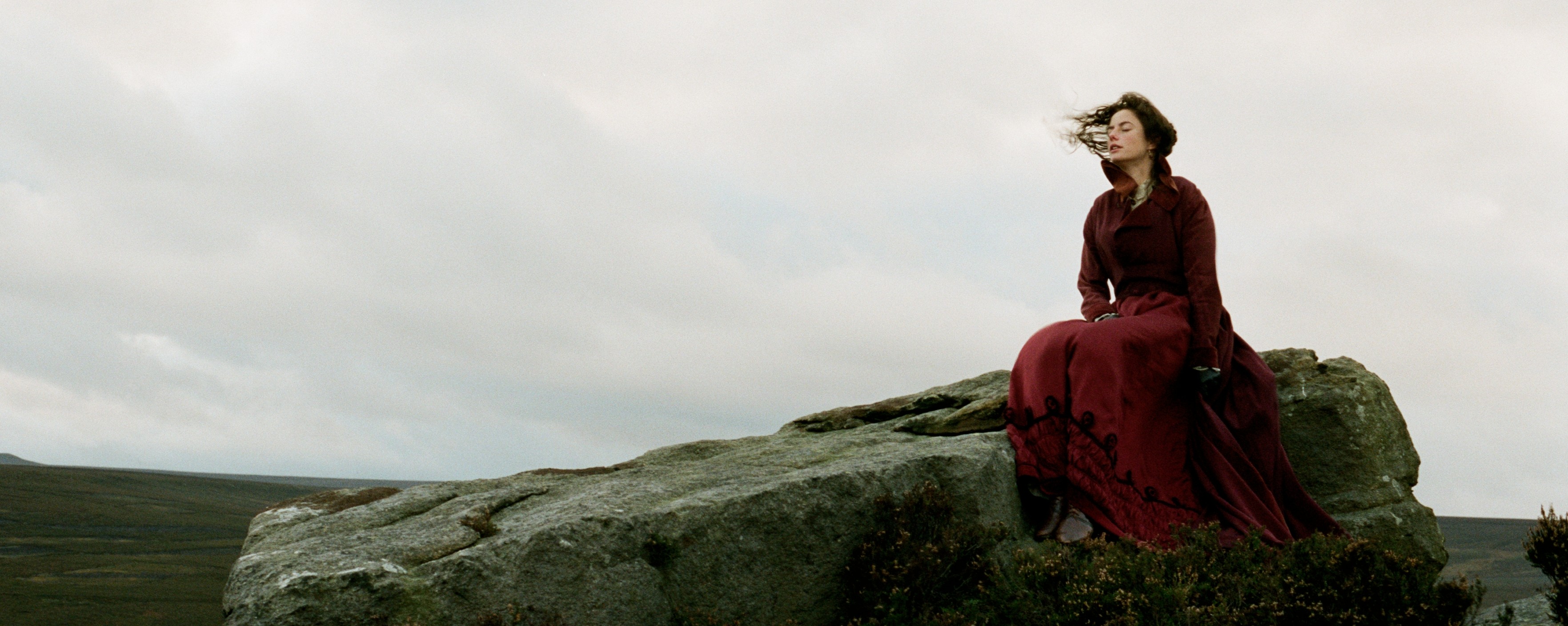
Wuthering Heights: Fiends on the Moor

Dante Gabriel Rosetti wrote in a letter that Wuthering Heights--the first novel he'd read in a while was:

"The action is laid in hell, — only it seems places and people have English names there."

I would argue that the infamous quote: "Hell is other people" applies.

Is hell the location of the story? The action of the story? Or the people of the story?

The moors are certainly desolate and so are the houses, but they exist as a social space. Like Sartre's famous play (No Exit), these characters are isolated and confined. They isolate, confine, and define each other through the story.


Ah, the English Moors . . . 

It's like a room full of mirrors in which the characters reflect their pain and then try to smash each other over and over in order to stop it. Everyone thinking that destroying the fiend will create happiness.

Where is the fiend?

Every character attributes the fiend to someone outside themselves that they cannot escape.

Now this is the first time that I have read Wuthering Heights and I admit that I was baffled most of the way through the book. Everything that I knew about it before I read it was that it was a tragic love story between Catherine and Heathcliff. So it was confusing to be to begin with neither one of them, but with Lockwood and Nelly Dean.

Felt about like that.

Nelly Dean who has been present for the entirety of the story and relates it to Lockwood and through Lockwood to the reader.

I asked: Who is the protagonist?

It took me a while but the book actually spans the lifetime of Heathcliff (as Cathy herself dies half way through the book--at what wikipedia tells me is the end of the first volume). So I thought perhaps Heathcliff is the protagonist.

And throughout the narrative the question seems to be--what kind of a fiend is Heathcliff? This ferocious goblin of a man that old Mr. Earnshaw plucked from the streets of London and introduced into the bosom of his home igniting a chain of strife that only ends with Heathcliff's death.

What kind of fiend is Heathcliff?

But who is asking this question? Why is this question foremost in the narrative?

Then I reached an interesting moment:

When Heathcliff kidnaps Cathy Linton and Nelly Dean to force Cathy to marry Linton Heathcliff. Nelly remarks that all night she believed that none of this would have happened if she had been able to carry out her duties properly. And she's talking all of it. From the moment of child Heathcliff's arrival at Withering Heights to the kidnapping.

Why is this interesting to me?

Because Nelly actually narrates the whole story, frames every action and speech given by the Earnshaws, the Lintons, and the Heathcliffs. She frames the story and she is a primary character.  The wikipedia character relationship chart mistakenly calls her an "observer" in the story. But she is a primary mover.

She keeps characters apart, allows them together, carries tales, doesn't carry tales, she chaperones, she provides opportunities for things to happen. She counsels characters, chides them, she influences characters.

She is a lynch pin in the whole narrative, without whom the story could not happen.

She could have told Heathcliff that Cathy loved him when she knew that he left after she said marrying him would leave them poor and degraded though she loved him as her own soul and would sacrifice marrying Linton to advance him in life. Important moments, y'all.

And only ONCE does she question her own culpability in this tale. Frequently she asks from whence Heathcliff has come and how is he a fiend. She judges other characters actions and even excuses herself from culpability by pointing to her own feebleness of limb (couldn't run fast enough) or social trapitude (station as servant or the situation or the other character's incredible will).

She lies to the other characters to get them to obey: "Linton, try to love your father Heathcliff and he will love you".

She steals Cathy Linton's love letters from Linton Heathcliff.

She agrees to things she hates.

She verbally abuses in situations that she admits to seeing how it's caused by hurt and not bad character.

--at this point, I again feel that no character is without hurtful, awful actions in this book--

But I continue to come back to our narrator because she is the only prevailing character through the whole narrative. Much like Barbara--in Zoe Heller's Notes on a Scandal--Nelly Dean is a character who tells the story of a scandal outside of herself, claiming to be an observer. However, both Barbara and Nelly are far more embroiled than either admits to. Both characters take actions and push the tragic central characters into things through advice or action, while ignoring their part in it.

I find these kinds of narrators fascinating. Especially in this case because I've never heard anyone mention Nelly Dean. She made it through the whole story receiving minimum physical violence (unlike just about every other character) and without too much emotional violence directed at her. Yet she has her hands in everything!

Do we wish to be Catherines and Heathcliffs and Haretons because we believe ourselves to be Lockwoods and Deans and therefore observers?

What is the question I want to ask?

Why do we love Heathcliff and Catherine and Hareton in spite of their horrendous behavior?

Why do we ignore Nelly Dean? Why does Nelly forgive them?

I certainly think this story deserves its place in the cannon, but is it a love story? (subject for another blog post)

What kind of a story is it really? Why are we drawn to it and its cycles of violence?

Perhaps it's just that gorgeous english moor? or the homely horror of the hauntings of each tragic death?

It's definitely a haunting, violent, and troubling narrative--despite its "happy"? ending?

I leave you with my favorite piece of at inspired by Wuthering Heights--Kate Bush's music video of the same title.


Friday, December 25, 2015

How to Keep Writing

I sit here and look at my blank blog page under my title "how to keep writing".

It's an ironic moment for me. I am subject to the procrastination bug--the I haven't written in weeks grief--the what do I have to say--how will I say it--questions and feelings that jump in the way and tell me over and over again that it's not worth it.

One of the hardest things to realize is that these voices aren't other people, they're me. They are me making stories that keep me from writing and questioning the badassery that I am.

This has been one of the hardest things to overcome and to put down in my life. These voices that tell me--this me voice that tells me that I can't win so why even try. 

I read an article today about how to keep writing even when you don't feel like it and the suggestions are good. 

The author suggests that you set yourself up for success by finding a dedicated creative space, by making it your job, by deep breathing and walk taking, by hanging out with other writers, and by feeling your grief over it. 

Every single one of these suggestions has to do with DOING something. You put yourself in a creative space. You put conditions that require it to happen, you move and breath and remind your body that you're still there, you surround yourself with people who also make it happen and when all else fails you sit in it and let yourself grieve. You let yourself feel the feelings so that you can go on. 

Doing something is the only way to quiet the voices.

Doing something is the only way to shut them up.

Somehow when you are actively pursuing something, you can let go because you're holding on somewhere else. 

Does that make you invulnerable? No, it makes you active. It puts you step by step closer to finishing a dream. 

So find a place, make some time, find a friend, and do it. 

Write it, make it, build it, and let yourself love it because you're worth it. I'm worth it. Life is worth it. Art is worth it. 

Saturday, December 19, 2015

The Alchemist: I have finally read it

All right, folks, this is not a drill. I have read The Alchemist by Paolo Coelho:


What a killer story. What a truly killer story.

What is this story about? This story is about Dreams, Listening to Your Heart, and learning the Universal Language. It's an unapologetically idealistic, mystic story about the battle against fear that keeps us from so many things. It's about the way that we choose what narratives we listen to. It's about the way that every step towards a dream, round about though it may be, can be enjoyed because we know that are pursuing something close to our heart. It's about honesty that hurts. It's about love that starts from the self and spreads outwards.

Ok, I could keep gushing and get more and more florid with my sentences.

But when we get down to it, we have a youth who has the same dream two nights in a row and, in the process of trying to find out what it means, meets a guide who sends him on a journey of thousands of miles.

This story actually is a perfect fit with Joseph Campbell's Hero's Journey.

Exhibit A

He receives the dream--a call to adventure--and a supernatural aid, in the form of a king who gives him two stones for asking questions (spiritual aid) and who guides/guards the threshold. Then, when the youth sells his flock and turns over a 10th of that flock (tithe anyone?) to the king--he is sent across the threshold into the unknown in search of that adventure. It is the beginning of transformation--a transformation which becomes literal towards the end of the story when he is asked on pain of death to transform himself into the wind. He faces many challenges and temptations on this fairly simple journey--the dream is that he will find treasure at the Pyramids in Egypt.

But the true treasure is in the journey itself. It's in the transformation of self and purpose that he gains from going through it.

One of the biggest things that this story has me thinking about is fear and dreams. And listening to your heart.


I often have a hard time listening to the voice inside me that whispers from my own heart. Like the youth, I often feel that my heart says horrible things. I reframe the words and have a habit of not acknowledging that they come from myself--but the alchemist/spiritual guide that the youth meets late in the book tells him that the heart not only speaks in love but also in fear. But that if you listen to it carefully you will learn to tell the difference of fear. You will learn to understand the things that you heart says to you.

I love this advice. This wisdom?

I love it because it doesn't meet out punishment. It doesn't say "ah, fear, my strong friend": you listen because then you understand. You will understand the difference between the fear and the dream.

For me, the fear is loneliness--I've spoken about it a couple times in reference to the dissertation. It's not even really being alone that is the fear but the overwhelming feeling of loneliness. As the book notes, the fear of suffering is often worse than the suffering itself (exhibit a: when I got my ears pierced). The fear that I will not be alone but FEEL alone.

So what is the advice he gives?

Pursue the Dream that your heart whispers about. Don't let the whispers fade before you act on them. ACT on them.

It is the doing of them that makes them real and that quiets the fear.

Even if you die in pursuit of the dream, every day leading towards it will have been worth it.

This book was just so good and so achingly wonderful to read. I finished it and I went for a run. Because I want to move. I want to move so much!

Hence my Practice as Research love: the knowledge you gain through motion is so fascinating and powerful for me. The knowledge you gain through writing.

So what's the take away?


  1. Listen to your heart until you know the dreams from the fear--journaling and meditating are great methods for this. Be brave enough to ask those questions and sift for the answers. They may not be the ones you expect. Be honest.
  2. Move/Act/Run towards your dream--no matter what it is. This is where the other narratives come in and say it isn't good enough, it will hurt, you'll feel lonely, you'll never make it. This is where you do it anyway.
  3. Live and Love in this moment--because, when you live this way, every moment is beautiful.