Friday, December 25, 2015

How to Keep Writing

I sit here and look at my blank blog page under my title "how to keep writing".

It's an ironic moment for me. I am subject to the procrastination bug--the I haven't written in weeks grief--the what do I have to say--how will I say it--questions and feelings that jump in the way and tell me over and over again that it's not worth it.

One of the hardest things to realize is that these voices aren't other people, they're me. They are me making stories that keep me from writing and questioning the badassery that I am.

This has been one of the hardest things to overcome and to put down in my life. These voices that tell me--this me voice that tells me that I can't win so why even try. 

I read an article today about how to keep writing even when you don't feel like it and the suggestions are good. 

The author suggests that you set yourself up for success by finding a dedicated creative space, by making it your job, by deep breathing and walk taking, by hanging out with other writers, and by feeling your grief over it. 

Every single one of these suggestions has to do with DOING something. You put yourself in a creative space. You put conditions that require it to happen, you move and breath and remind your body that you're still there, you surround yourself with people who also make it happen and when all else fails you sit in it and let yourself grieve. You let yourself feel the feelings so that you can go on. 

Doing something is the only way to quiet the voices.

Doing something is the only way to shut them up.

Somehow when you are actively pursuing something, you can let go because you're holding on somewhere else. 

Does that make you invulnerable? No, it makes you active. It puts you step by step closer to finishing a dream. 

So find a place, make some time, find a friend, and do it. 

Write it, make it, build it, and let yourself love it because you're worth it. I'm worth it. Life is worth it. Art is worth it. 

Saturday, December 19, 2015

The Alchemist: I have finally read it

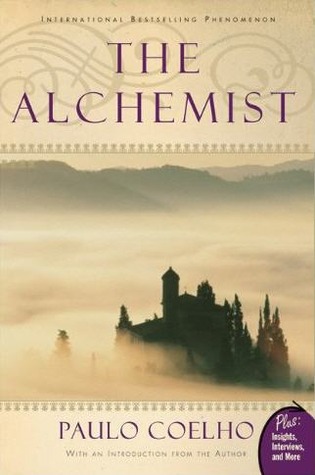
All right, folks, this is not a drill. I have read The Alchemist by Paolo Coelho:


What a killer story. What a truly killer story.

What is this story about? This story is about Dreams, Listening to Your Heart, and learning the Universal Language. It's an unapologetically idealistic, mystic story about the battle against fear that keeps us from so many things. It's about the way that we choose what narratives we listen to. It's about the way that every step towards a dream, round about though it may be, can be enjoyed because we know that are pursuing something close to our heart. It's about honesty that hurts. It's about love that starts from the self and spreads outwards.

Ok, I could keep gushing and get more and more florid with my sentences.

But when we get down to it, we have a youth who has the same dream two nights in a row and, in the process of trying to find out what it means, meets a guide who sends him on a journey of thousands of miles.

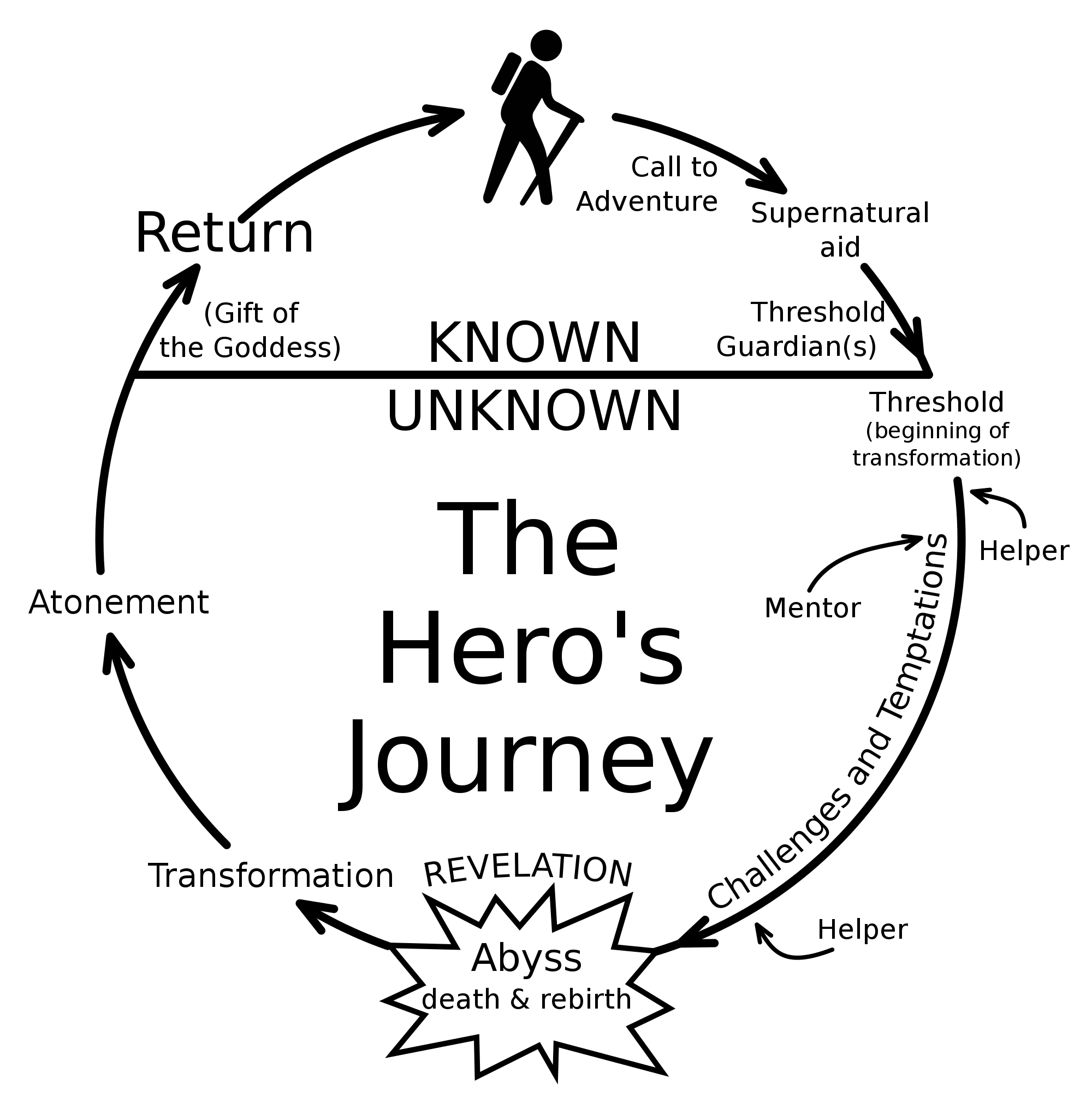
This story actually is a perfect fit with Joseph Campbell's Hero's Journey.

Exhibit A

He receives the dream--a call to adventure--and a supernatural aid, in the form of a king who gives him two stones for asking questions (spiritual aid) and who guides/guards the threshold. Then, when the youth sells his flock and turns over a 10th of that flock (tithe anyone?) to the king--he is sent across the threshold into the unknown in search of that adventure. It is the beginning of transformation--a transformation which becomes literal towards the end of the story when he is asked on pain of death to transform himself into the wind. He faces many challenges and temptations on this fairly simple journey--the dream is that he will find treasure at the Pyramids in Egypt.

But the true treasure is in the journey itself. It's in the transformation of self and purpose that he gains from going through it.

One of the biggest things that this story has me thinking about is fear and dreams. And listening to your heart.


I often have a hard time listening to the voice inside me that whispers from my own heart. Like the youth, I often feel that my heart says horrible things. I reframe the words and have a habit of not acknowledging that they come from myself--but the alchemist/spiritual guide that the youth meets late in the book tells him that the heart not only speaks in love but also in fear. But that if you listen to it carefully you will learn to tell the difference of fear. You will learn to understand the things that you heart says to you.

I love this advice. This wisdom?

I love it because it doesn't meet out punishment. It doesn't say "ah, fear, my strong friend": you listen because then you understand. You will understand the difference between the fear and the dream.

For me, the fear is loneliness--I've spoken about it a couple times in reference to the dissertation. It's not even really being alone that is the fear but the overwhelming feeling of loneliness. As the book notes, the fear of suffering is often worse than the suffering itself (exhibit a: when I got my ears pierced). The fear that I will not be alone but FEEL alone.

So what is the advice he gives?

Pursue the Dream that your heart whispers about. Don't let the whispers fade before you act on them. ACT on them.

It is the doing of them that makes them real and that quiets the fear.

Even if you die in pursuit of the dream, every day leading towards it will have been worth it.

This book was just so good and so achingly wonderful to read. I finished it and I went for a run. Because I want to move. I want to move so much!

Hence my Practice as Research love: the knowledge you gain through motion is so fascinating and powerful for me. The knowledge you gain through writing.

So what's the take away?


  1. Listen to your heart until you know the dreams from the fear--journaling and meditating are great methods for this. Be brave enough to ask those questions and sift for the answers. They may not be the ones you expect. Be honest.
  2. Move/Act/Run towards your dream--no matter what it is. This is where the other narratives come in and say it isn't good enough, it will hurt, you'll feel lonely, you'll never make it. This is where you do it anyway.
  3. Live and Love in this moment--because, when you live this way, every moment is beautiful.

Friday, December 18, 2015

On Art and Community, Or the Argument for Communes

Today I want to write a post about community.

Writing a dissertation is hard. The hardest part? It's mostly alone. Well the writing part. I got lucky and got to do my research by producing and directing plays--yes! Working with artists. Best decision ever. But the writing part has got me mostly on my own for two years and they've been some of the hardest working years of my life!

Mostly due to the loneliness of writing my work down all alone with little frame of reference and an unhealthy dose of sheer terror in regards to sharing my work with others who may have done a lot of more different kinds of research than me. The Academy is very good a instituting fear of failure.

Having now moved into a suburb of Seattle--even further away from most people/communities I know--I can tell you now that I CRAVE community for my art. All kinds. Not having people physically present is not only lonely, it is demoralizing. It is draining.

It makes me think about transcendentalism... Yeah, that's right. These guys:

Yep: These guys =D and Lady.

I love them--You've got Henry David Thoreau and Walt Whitman. You have Amos Bronson Alcott. And, of course, Granddaddy of bad: Ralph Waldo Emerson of "Selection from Self-Reliance" fame.

These guys were the idealistic social reform hippie bad boys (and ladies) of mid 1800's America. They were into nature, wrote poetry, created social reform communes and experimented with how to live better lives. They set up journals and schools. They wrote essays and lived alone in the woods (in each other's backyards). They were a little weird and New Englandy--but hey! They believed that people could be better and tried to figure out how to do that!

They believed in struggle of the persistent human spirit. I was really fascinated by the togetherness of it. Striving, not just alone, but also together because they believed in Unity of human spirit, world spirit the transcendent nature of reality.

I think of them now because I am in the midst of serious longing for community of artists. And I am reminded of Nathaniel Hawthorne's Blithedale Romance. Hawthorne is considered by many a black sheep transcendentalist--according to my professor. He along with author's Melville and Poe wrote in a bleak and opposing style to the transcendentalists--but Nathaniel hung out with Emerson and the others for a while. And his Blithedale Romance is thought to be based (loosely) upon his own time on one of the transcendental work farms (read commune!).

Now, the Blithedale Romance is not a happy story:

Cheery

In the Romance, the main character falls in love with a charismatic woman who's in love with a creepy charismatic and ultimately evil, culty guy who kidnaps a whispy gamin of a girl. And to top it off, the woman dies and the main character does not in fact get better at his art by performing menial farm labor close to the giving earth mother. 

Ok. I'm severely simplifying.

But the point is, it's a rather satirical look at the who commune idea. The wonderful people with lovely ideals find that their lovely ideals fall apart in the face of human entanglements. Of course human entanglements. Of course drama. Of course things come up with you live closely with others. And inflexible idealism can make that hard. 

However, I am not reminded of this story because of it's failure. I'm reminded of it because of the togetherness. 

Communes--Co-ops and other group endeavors--at least in my experience, do not last forever. This makes sense to be because the people in them are constantly changing and growing--their relationships and needs change and grow. But the time that they are together is something really special. 

I'm getting farther afield from both the transcendentalists and from Blithedale. 

Perhaps I'm going somewhere nostalgic, but the best things I remember doing were things that we did together. 

Like Cute Fluffy G*Damn Ducklings!

I think that's why artist houses, artist groups, artist collectives are so common (that and the ridiculously low wages that people pay for work that is SO TIME CONSUMING!!!).

Cheese: It is not good for man--woman--artist--person to be alone.

Social creatures. I like to be surrounded by collaborators, workers--whether we're working together or not.  This may have been influenced by my 22 years of school >.> [almost a doctor, almost a doctor]. But it is also influenced by my favorite experiences--Shakespeare festivals, Leadership conferences, Trumbull house, Underground, Honors Dorm, Dorms in General, Cousins at Christmas. 

I am reminded of the atrophy of not being near others in a living situation by Notes on a Scandal (not the movie--the book!). Zoe Heller has this amazing poignant line written by this aged school teacher who lives alone and is on intimate terms with no one. She writes:

"They don't know what it is to be so chronically untouched that the accidental brush of a bus conductor's hand on your shoulder sends a jolt of longing straight to your groin. I have sat on park benches and trains and school room chairs, feeling the great store of objectless love sitting in my belly like a stone until I was sure I would cry out and fall, flailing to the ground." (197-198)

She is talking about human connection--the need that we have of it. So deeply to love and be loved--not just in a sexual way but in a nearness. Proximity and the ability to love on each other and be loved.

I think this kind of connection and sharing is vital for artistic generation. At least for myself. There may be other artists who thrive on solitude (Thoreau certainly did--and Emily Dickenson didn't do too bad either) But Emily had a thriving connection with other artists and thinkers through letters. And Thoreau brought his laundry into the house to hang out with Emerson once a week.

The differences are generative. The support essential--especially in our contemporary milieu: an environment that teaches us that artistic risk and aesthetic failure are weakness. That the work it takes to create art is non-valuable in terms of money unless it fulfills a certain criteria.

I'm going to write about this some more. Think about this some more. This is a pretty general post, so we'll get into some more.

I have a great book to respond to on it call Against the Romance of Community. Part 2--Community the RomCom--coming to a blog near you:


Saturday, November 28, 2015

Seeing Things

"How do you know?"

This is a question my partner asks me almost constantly. For example, this week while driving to Friendsgiving, we crossed into the state of Oregon. I said, "We're in Oregon!" He said "How do you know?" "Signage." "How do you know?" "It said we're in Oregon."

It's easy for me to get extremely frustrated by this because we're often in the same place with the same visual, auditory, olfactory stimuli surrounding us. Its easy to feel mocked by the question as in--of course he sees, hears, smells, how can he not know how I know?

Looking at it in print makes it seem much less mocking.

But I think of it today in response to Della Pollack's article "Beyond Experience" in which she opens by discussing the primacy of the "seen" experience. She discusses the cyclical "I saw it therefore it is and it is because I saw it" which becomes a co-constitutive experiential fortress. You can't question the process of seeing and seen without questioning the "self" that sees the scene. She states is beautifully:

"To wonder about the scene-seen is to risk the stability of the seeing self constituted in relation to it." (638)

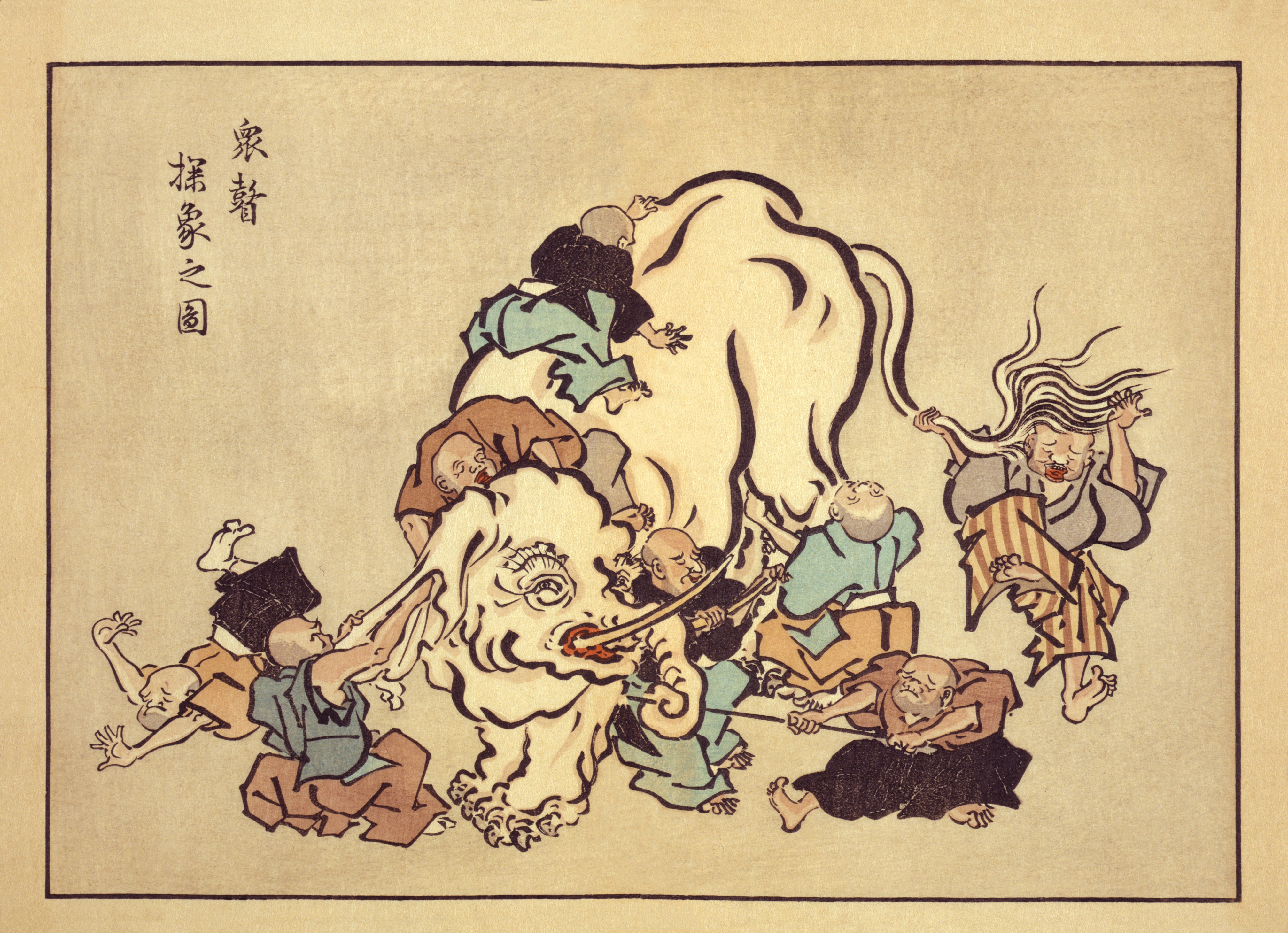
I wonder then about the reliance on what was seen to the authentication of self. When he asks me "How do you know?" and it was clearly seen and then he questions what I saw--I feel defensive because my co-constituted self is questioned. The self that saw something might be wrong if I can't justify or explain how I knew the thing. This troubles me for a couple reasons. First, it places the responsibility of constitution outside of myself and it seems to indicate that the self that I constitute by seeing the world around me is fragile enough in my own conception to feel threatened by questions. Especially knowing that these questions don't actually threaten self or experience but rather seek to make them more available to understanding and discussion. Especially knowing that the seen experience is only part of knowledge and by no means the only verifier of event or experience. Also knowing that multiple people could see one event and report it distinctly--a la the classic elephant example.

Is it a bird? A plane? Superman?--Ironically, said monks are blind.

When your perception is questioned it's easy to feel that your legitimacy is questioned. Your experience questioned? Your existence is questioned--what are you apart from your experience, your genes, and your choices?

Taking this in another direction, I wonder about Theatre. Theatre is literally the Seeing Place. It's the place that we go to see a story. The relationship of audience to performance is traditionally, usually, mostly that of seeing the play/musical/performance.

The audience makes it theatre because without audience there isn't theatre--is there?

According to Amanda Palmer in The Art of Asking, part of art is sharing and you share with the audience--what is the audience's experience?

Marco De Marinis points out that there are two ways to look at the audience: passive and active. We can look at them as receptacles of our work--"a mark or target for the actions/operations of the director, the performers, and, if there is one, the writer" or we can look at them as active "referring to the various operations/actions that an audience carries out: perception, interpretation, aesthetic appreciation, memorization, emotive and intellectual response, etc" (1).

I prefer the active but many--most productions I see, treat the audience as passive receiver of theatre. If their role is meant to be active, how do they know how to do so? How do they know their job? What is their experience? And do they feel uncomfortable with other roles because those roles question their experience and ask them to do something with it? Does it challenge their self-role as audience?

A director friend of mine once made a comment that as performers we craft a performance that teaches the audience how to respond and that it helps to craft that relationship, experience, and action.

Another director that I worked with didn't understand why I wanted to know the mechanics of the illusion we were trying to create instead of just knowing that we were pretending to struggle. She told me what the audience needed to see--but I was hung up needing to know what how I do that? How do they know that this is happening? How do I do that? How do I create that illusion? What are the elements of the illusion--from my mime training, I remember that illusion breaks down into pieces which all together create illusion.

Because what the audience sees is what is happening--if they see you pretending, they will see you pretending. Illusion is different than pretending.

Mmm... I think I've lost the explorative train of thought. Will think more on this, dear readers.

Thoughts? 

Friday, November 27, 2015

NaNoWriMo and the Persephone Novella

I'm doing NaNoWriMo, for real this year.

I joined the website and I'm keeping a word count and everything. I started a brand new novel on November 1 and I'm still racing to finish by November 30 in just 3? 4? days?


But for real. It's going pretty well. There have been days that I haven't written anything (bust) but there have been many more that I wrote even just 500 words. Just something on the page so that I'm working every day.

I have learned a lot. For instance, I am excellent at writing sprints. What's that? I hear you ask.
That's when you set a time limit and type/write as many words in that time as you possibly can. No filter, no judging, just get them out of you. Sprint them out until your fingers bleed!

Ok, maybe not bleed. But I found out that I can write 950 words in 15 minutes.  I can crank it out! This means so much for my work methods and structure. If I can set that kind of time and work through sprints like that, it means that I can spend 15 minutes a day and write something, anything. I can produce material and, if I can produce material, I can make more art than I thought I could.


It means we call can! Sí, se puede!

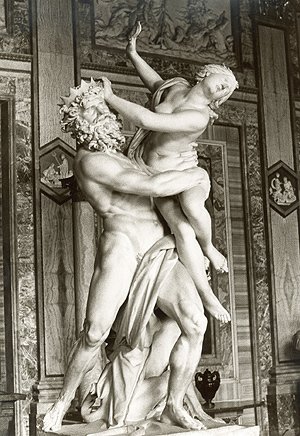
So I've been writing about Persephone. I've loved her for a long time, but I have had a huge problem, especially in the last 5 or 6 years with the general kidnappy narrative about how Hades violently ripped her from the world--a naive virgin and tricked her into marriage.

Like this.

I look her up and realize that she is a Chthonic deity. She is goddess of the underworld in her own right and I wonder how a flower goddess ends up as a goddess of mysteries and the dead as well.  I begin to come up with some interesting ideas.

  1. Persephone is not an unwilling and naive victim
  2. Persephone understands something about death because of compost making pretty flowers
  3. Persephone is an agent in her own life
  4. Persephone is a threshold goddess--she moves between life and death, this is inherent to her as a goddess
  5. Persephone was wooed by Apollo and Hermes too.
  6. Persephone has a much bigger existence than her wedding to Hades
  7. Persephone is a badass
  8. Persephone is a POWERFUL goddess
These things start coming to me and I start grappling with what that means to a goddess describing her life. Somehow this is a novella about innocence and not innocence. About life and death, about me and about the world I see, about myths and the way they shape our reality. This novella is rapidly becoming a favorite even as I struggle to get stuff out. Some of it I really hate, but the more I get out via the sprinting process, the more that I want to get it right and the more I want to right. Fits and starts, but steady work happening. 

Selection? Why I thought you'd never ask.


From Persephone Draft 1--Persephone meets Antigone

Antigone was brought to a cave and sealed inside to die. She was buried alive. And She raved begging to be taken. She prayed to Hades and to Zeus. She begged us to reward her righteousness and take the burden of life from her. Her suffering was great. Her family was cursed in a way that few are. It’s another thing that makes me wonder about Fate. I came to her fairly quickly, and looked at her as through a glass darkly. She was close to us. How could she not be, sealed there to die as she had been.
Hades came to me and asked me to see her. He didn’t know what to do with her--it would be theft to take her before it was her time, but she had been thrust from her time by a willful king. Her uncle I recall. He was soon to experience deepest grief for his refusal to perform funeral rites for a nephew. Hades had raged about it for a week.
I visited her in the cave and I had never seen a girl so full of life and full of pain. She was beautiful in a way I hadn’t thought that mortals could be beautiful. Her hair was long and straight like a knife blade and her eyes were green like the the ocean that raged behind her lips. She was violent with righteous anger and salt water boiled beneath her skin.
I understood what the Others saw in mortals for the first time. I moved around her to better see. She creaked with pain in every movement. She had punched the rocks piled in upon her until her knuckles bled and she let them bleed. She prayed and she did not know that it was to me she prayed. She could not see through the mystery, but she looked up and she saw me and I felt the inadequacy of godhood for the first time. In my existence. 
I had always felt so large, pressed against the edges of reality. Looking at Antigone, listening to her repeat her story, I felt the smallness of my purview and I knew that while I contained one of the biggest mysteries in the universe, that I would never understand the depths of the rage and vitality that pulse in this woman. That the pain that would not kill her, led her to do the right thing instead of the smart thing. That lead her to seek no happiness for herself while seeking all happiness. I use the word ocean over and over because I am sure she was a daughter of Poseidon in some sense--though I knew very well that the source of her over abundance of vitality and pain was of course from her lineage. But she was--no she was like a volcano in the ocean. She had so much life and she wanted to die.

Wednesday, November 18, 2015

The Art of the Hot Drink

I LOVE a good hot drink.

Teas and Coffees and the multitude of flavors there in.


I love the aesthetics of holding a hot/warm mug in your hands

So cozy!

Also this... why don't I own this yet?

There's something wonderful about a good blend of tea--when it's interesting and exciting with multiple flavors that work together. 

I love simple syrups infused with herbs and flavors that highlight the coffee in a latte. 

This week and last I had a couple fantastic blends. The Soothsayer--a chamomiles citrus blend, The Citrus Rose, a lavender latte, and a goddamn Apple Cardamon Rum latte!

Perhaps I will mix my own someday... I already mix my own chai =) Assam, fennel, cardamom, cinnamon, and sugar finished with milk.

It's such a lovely art form. Flavors, you know? 


Tuesday, November 10, 2015

Jane Eyre

This blog post by the Economist talks about the anger in Jane Eyre and in Charlotte Bronte.

It's an interesting post that discusses the inherent anger and violent energy within Jane, the character and how it reflects Charlotte's anger over her position in life and the lot of women.

Charlotte was educated but was hemmed in by her status as a woman in England. The author talks about someone remarking that the novel would have been admirable if written by a man but was "odious" from a woman.

While I was performing the piece, I didn't think about the anger of the character because I wasn't portraying that part of her. The adaptation we were doing split Jane into Jane and Bertha. Bertha was the emotions that Jane locked away and refused to share. Interestingly, this was said to be extremely powerful. That Jane denied herself the feelings but could never truly abandon them.

I think about the play Mother Courage, in which the titular character literally drags her burdens with her throughout the piece in the form of her cart full of items for sale. Her business is meant to keep her and her children safe and ultimately it is the business that causes the death and destruction of her family.

Similarly, this adaptation of Jane Eyre claims that Jane causes her own misery--ie she is unable to truly be happy without Bertha. Denying herself does not lead Jane to happiness.

The metaphor is not perfect. Metaphors seldom are, but I don't remember feeling the anger of the character during the process, though my incomparable co-star, Sarah, absolutely did. I remember her remarking on dozens of occasions, just how frustrating the whole process was for her to watch Jane refuse to react.

I remember how strange it and frightening it was for me to be required by the script to hold back and yet to need to be totally emotionally available through my eyes and face.

I consistently wanted something physical to do. The challenge of needing to remain still the challenge of holding myself together while needing to be flighty. It was exhausting and terrifying.

Where was the rage? Where is Jane's rage? Where is the simmering burbling underneath of Jane that this author talks about? 

Saturday, November 7, 2015

Horror on Stage

According to CM Humphries: the 5 elements of a Good Horror Story are as follows:

  1. Fear
  2. Surprise
  3. Suspense
  4. Mystery
  5. and SPOILERS!
Actually a pretty good little article. I think the most interesting thing is that the fear is not necessarily of something the audience is afraid of--hence the surprise: where the storyteller makes use of the audience's imagination. Because the audience can imagine something way scarier to themselves than you. When we talk theatre, they're actually sitting there having brought their imaginations to specifically use with you. Such a gift! [*am a little bit hippie dweeby* RIDE IT]

So then they audience is afraid of something, they're imagining it happening, waiting for it to happen--and suspense! Which is followed by mystery of how it will happen, when, and why?

His most interesting point is that spoilers at the beginning make everything else richer and deeper because then the audience is examining every word and nod looking for what they know is coming or what they hope is true. Ex. People seeing Insidious 2 know that camera spoiler from the end of Insidious. So we go in looking for it! OMG where is it, when will it come out! Etc Etc. 

Humphries has some great basic elements!

He is, however, discussing writing a story, not performing it onstage.

So how do we create fear onstage?

I can tell you that some of the things that work in movies and novels DON'T work in the theatre.

For example, I saw a production with vampires in a tiny 20'X15' space and they were this kind of vampire:

with canes, hissing, and too much white face paint

The effect was comical. It was unfortunate. And while the production had them do some TRULY disturbingly realistic fight choreography in the realm of rape and murder. Their vampire-ness was laughable rather than other-worldly. So there was no fear, no suspense really. Instead the production relied on gore and shock value. Lots of blood and lots of REALLY VIOLENT choreography. I am willing to admit that this may have been a choice in such a violent and bloody play, make the vampires funny to relieve the tension--but it was really confusing and awful. I think Supernatural makes a good point: 

"Dean! It's just people!"

So then, we have the upper hand right? In theatre, we have just people! And yet, somehow, the ghost scene in Hamlet is always a little weird too, right? Man walks out in the fog and starts all "Hamlet I am your father, you uncle shanked me in the ear! Fucker..."

In the last production of Hamlet that I did <plug: catch it on a remount Thanksgiving weekend 2 nights only!> we used a really unique blackout and sensory experience for the ghost. Audience and actors plunged into darkness with a music box (creepy) and the smell of perfume. To be fair, in that production, because the concept was women in an asylum putting on Hamlet, there was no illusion on the part of the performers in trying to make it as tho a ghost had entered the room. And so, instead--JUST PEOPLE--but damn it was creepy!

There was absolutely suspense and fear because the audience didn't know which actor was playing the ghost or why. They didn't know what was happening, but they also knew that it was Hamlet--so ghost scene, pretty predictable. They're looking for it, but it's in a new and surprising way. Ha! 

Another production: Let the Right One In the London show at the Apollo Theatre. 


It was pretty damn cool. And yes, pretty damn scary. They started with a fantastic story, which went from novel, to screen, to stage. The horror story is damn good. It's about a little boy who meets a child vampire in a little town in Sweden. And hotdamn! It's scary. But again, I like to beat this drum. It comes back to people. People are scarier than the vampire. The vampire is obvious--s/he needs to eat blood to survive--hence death. S/he is creepy fast, creepy smelling, and creepy intellectually (being a hundreds year old child). But the story is really about the bullies that the little boy faces and just how much he's willing to do for love versus how much he's willing to do for fear. It's just people--so the production again focuses on the boy and the surprising part of the story is that the people are scarier. The suspense and spoiler are in knowing that the girl is a vampire and waiting for that to really kick into gear. And the horror--the fear--is that the people are worse. You were scared of vampires first, but now you're scared of people. You're scared of the boy.  

The landscape is beautiful and so magical with white snow falling through birch trees that reach up into the rafters and the ceiling. But we only get tastes of her/his otherness as a vampire while we watch the boy change and grow through the constant bullying, the neglect of his parents, and the loving friendship with this child vampire. Hmmmmm..... 

This brings me to probably my favorite horror play that I've seen--The Woman in Black, produced by students at WSU's Studio Theatre. 


These kids did so well! All of their set and costumes came out of a box. It seemed like there were 3 actors--in actuality closer to 7? And they managed to create jump scare after jump scare using the same technique of bringing a woman in black into an aisle in the dark then flipped a blasting light on her while playing a scream sound cue. God it was scary. 

I keep coming back wondering why this one was so scary. The set was minimal--most of it came out of a trunk. And most of the story was told by two characters, the author--the storyteller and the man who played everyone else. The isolation effect was in play. It was a small space so just us, the storyteller and our collective imaginations. We knew, because the set was so limited, that our imaginations were required. The lighting was low, and hot damn.

We knew we were all pretending and that made all of the jump scares even scarier--almost like we all cuddle up around the campfire and then the tale teller is not pulling punches!

So the production told us they wouldn't use illusion -- the minimal set: i.e. this is all memory, imagination; but then they used REALLY effective illusion to bump up the supernatural moments. Ex. "I saw this woman" cue SCREAM LIGHT WOMAN!!! audience: "WHAT?? OMG we saw her too!!"

Conclusions? Not sure yet. But the storytelling and inviting the audience's imagination seem extremely important for the stage. Letting the audience know that they're part of it, they're in on it--spoilers--means that they get to take part in the magic, they get to look for what's coming. And that's really exciting. Hmmm.... 

Food for thought. >.>


A Turn of the Screw... or two . . . or three

We're working on an adaptation of A Turn of the Screw by Henry James.

Ghosts and Such

It's the story of a Governess as told through frames: her initial biographical manuscript of the events of her first governess job, which was given you a young man years later who loved her, which he shared years after her death as a scary christmas ghost story with a friend (our narrator) and guests. This governess worked in an isolated mansion as lady of the house in all but name where she cared for two children (a boy and a girl) who she believes to have been haunted or chased after by or in league with two ghosts. 

Now the remarkable thing that Henry James did was to take horror as a genre and move it from exotic countries and gothic mansions to the English country side. He took ghosts and put them in the home with the children. OOOO CREEPY!

Seriously tho...like Hitchcock only he's staring into my soul

In fact, in the story the middle narrator (the man with the manuscript) actually gives the book it's title by remarking that the last ghost story told had a child in it, but he would give us "another turn of the screw"--meaning a heightening of the suspense and creep factor--by telling us a ghost story with two children.

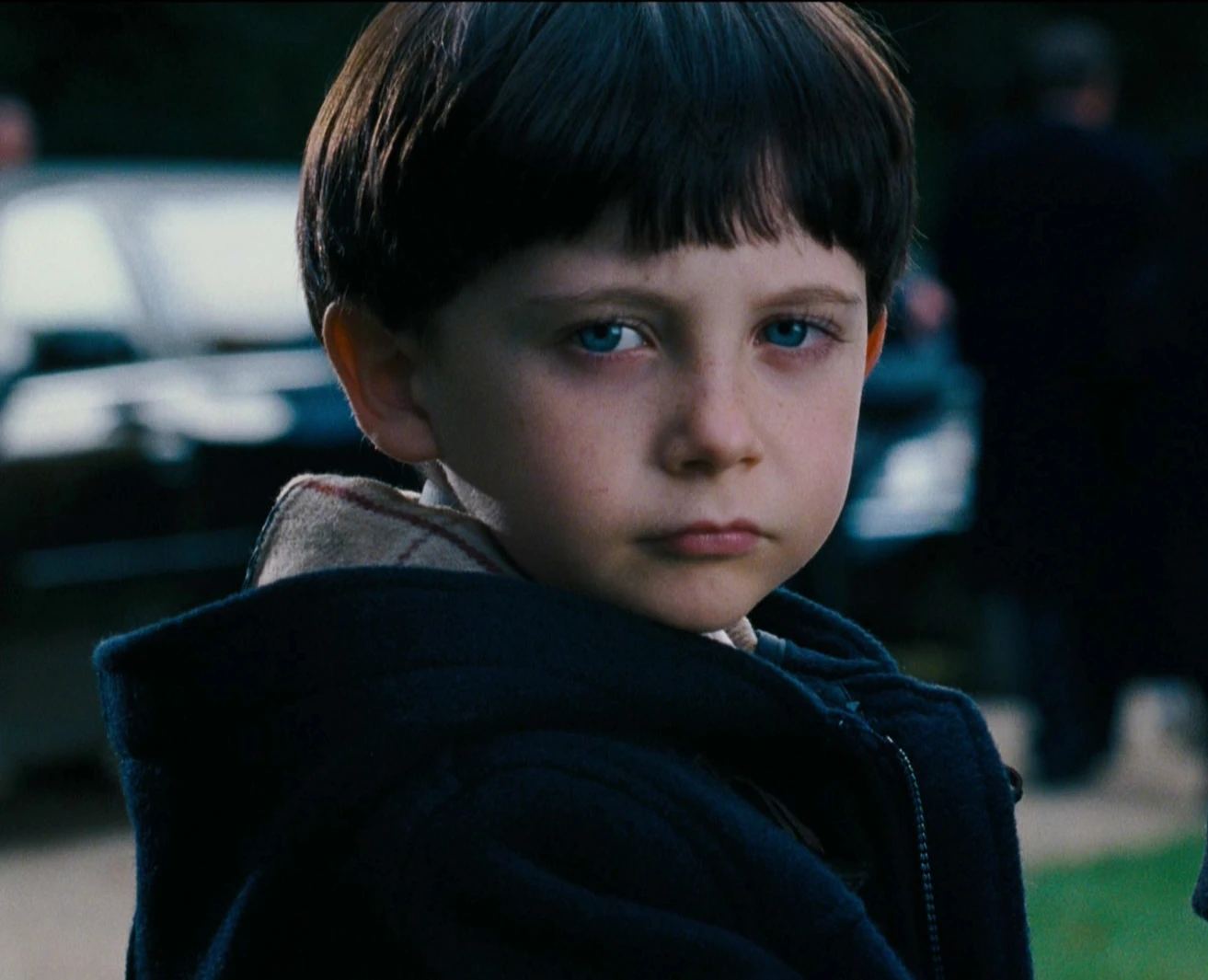
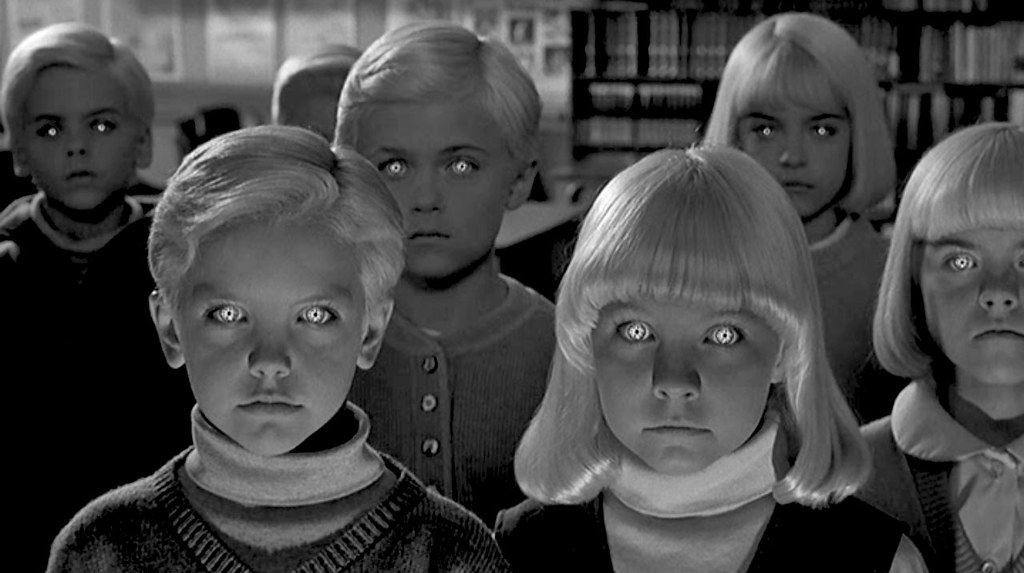
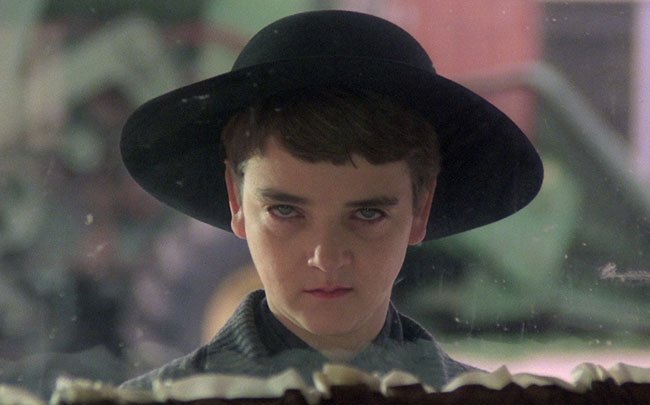
The descendants of this trope are probably familiar to most of us: I mean creepy, possibly possessed, possessed, and otherwise terrifying children in horror stories.


Ok enough: point taken--CHILDREN CAN BE CREEPY!!!! EVIL LITTLE CREEPY THINGS THAT KILL YOU! RUN RUN AWAY! TRAPPED, WE'RE TRAPPED LIKE RATS, THE CHILDREN!! NOOO!! 

ok, ok, we're ok. 

Maybe.

But even creepier probably is happy evil children. 

For example--if you get a chance, watch the original 1973 Wicker Man. Those happy kids are so creepy. [too be fair it's really just creepy how happy they are when he's all "do you know this missing, clearly missing child?" and they're like "No" =D] 

But in Turn of the Screw the children are over and over again referred to as angelic and beautiful and perfect and lovely and how could there be anything wrong with them? It's creepy.

What is my point?

We're adapting this sucker and one of the most interesting facets to me is the isolation of this woman. All day the governess is with these two perfect, perfect children. And we're never sure, because she can't talk about the evil--which is too horrible to utter--that she is certain she sees closing in around them. Isolation--another excellent horror story trope. 

After all, scary stories are much less scary in the daylight when you're surrounded by people and not at night, virtually alone next to a fire or in your bed, with a small girl nearby who keeps getting out of bed after midnight to stare fixedly out a window. >.>''

So in this adaptation there are some questions that we've been mulling over.

First--what's the dramatic question?
Meaning here--what is it that we all want to know the answer to? Audience, Actors, Directors, Characters.

So far it seems like: Is the Governess Right? or Can she Save the Children?

It seems very important to the governess that we know that she was right even though she did not feel able to act on her convictions except indirectly through most of the story. She talks about not speaking to the children about the ghosts, but also knowing that they knew about the ghosts and that they knew that she knew and that we were all pretending not to know together.  But the book is written so obliquely. The story is told so indirectly that it's hard to even know exactly what the malady is that she perceives the children under except that they are corrupted into duplicitousness by these spirits and must be saved.

The girl, Flora, goes into some kind of fit after the governess finally calls her out on the ghost's presence, and the governess and housemaid send Flora away. 

The climax of the play is about whether or not she can save the boy, the elder child: Miles by getting him to confess to, I guess, consorting with the ghosts.

Yeah... it doesn't go so well. 

Spoiler--the governess doesn't save Miles. He dies of a heart attack--seemingly. Unless. the governess hugs him to death. Again, it's unclear.

The cool thing about the lack of clarity is that we get to make some choices in our adaptation. We get to choose what's the most important dramatic query. We get to pick the most important events. 

So here's to that! 

More inquiries and experiments to follow! Also a post on finding a place to put this sucker up =D Locations!


Wednesday, October 21, 2015

Dracula and the Art of the Adaptation

Starting an adventure in Seattle Theatre! Yes!

First show that we saw in Seattle was at Taproot Theatre Company. In honor of the season, the show was Dracula! ::flash of lightning--bumbumbuuuuuum::

So the show was very fun and afterwards, luckily enough, there was a talkback with the director and cast of the show, which was thoroughly enjoyable. So I'll give you a quick recap of it:


  • The show is beautifully costumed in period attire and rendered against a small three-quarter thrust castle interior. Downstage has a few levels with seats that went off and on and upstage was dominated by a large stone wall with a wrought iron fence in it.  The show's style maintains a tricky balance between earnestness and camp in which the actors manage to paint the characters in big bold strokes without leaning into stereotype or melodrama. This is especially true of the actor playing Dracula. While his Transylvanian accent is clearly distinguishable and he does hiss on occasion, he never quite tips into Bella Lugosi or Leslie Nielsen territory. Also true with the actress playing Renfield (yes, a lady, w00t!). She managed to make this one of the most really creepy elements of the show as she pursued flies, spiders, and birds for more power. 
  • The director and the adapting playwright have deliberately crafted their adaptation to reflect themes like good vs evil, sacrificing life vs taking life, and the power of a small group of friends who want to change the world. So the scenes between the band of merry adventurers were heavy in act one to establish their care and their relationships. And in the final confrontation with Dracula, Mina has a lovely--goose-pimple inducing--monologue about the nature of loving sacrifice and it's power against Dracula as a parasitic anti-christ. With these themes, they worked very hard for verisimilitude of feeling with each character and scene. The darkest darks and the lightest lights were tempered and fueled by honesty rather than humor or real horror. 
  • The style pulled together letters and newspaper clippings, journals and recaps with some direct address to the audience which proved fairly effective--both at translating the style of the epistolary novel and conveying the information between characters. There were some fun jumps scares and use of space--like the aisles, which made some audience members scream. And some fun feminist moments: Mina has a fiery retort when her male cohort tries to keep her out of harms way which provoke cheers from the audience [though what are you going to do when the plot demands that she does get nicked by Dracula?].

And there's my phd for the day. The questions I really want to ask are about the adaptation of an epistolary novel into a theatrical event and the about the nature of horror onstage (second one, probably in a second blog). 

When adapting a novel to the stage, one of the biggest problems I find is that the novel as a form is ill-suited to the stage as a medium. Case and point--Dracula is an epistolary novel which is scary in large part because you are reading documents of a "true account"--you can't see it. All you have is their word and your imagination. Theatre is a primarily audio-visual medium. This means that the primary horror creator--your imagination--is in someway being engaged through miss-en-scene.

Yes, yes, I hear, this is the problem with any adaptation from Novel to Stage and even Screen.

I think it's interesting though that this means we usually choose from creep factor or shock factor for horror in theatre:


Creep factor and Shock factor?

So then I am curious because in many adaptations of novels I find myself bored because there's so much exposition in order to get to the action, and action--really doing things--is, I think, the root of theatre. We go to see live people really do things in front of us. Others might say that this ignores the story portion of theatre, but there are MANY mediums for the sharing of story--theatre is unique from those methods because you have real people really doing it in front of you. It's why we see just about anything live--real people, real actions. You might also jump in and say: but if they really kill each other. Then we have to discuss the fact that we go knowing that there is an element of imagination because if they really killed each other it would be a whole other thing. But the actors are really doing the illusion of killing someone else or really doing the symbolic killing of the other character. 

So to the point: adaptations of novels are hard because novels tend to be a lot of exposition about the situations of characters, their inner lives, their feelings, their wants and needs communicated through text. Which is why, of course, if a Lizzie Bennet actress doesn't full convey all the feeling that we remember being explained in the text, we become cranky and say it was a bad performance. 


So I return... again. Adaptations: 

When adapting what kind of questions should you ask? Is it possible to do more than illustrate a novel onstage? 

I think yes and here are some questions that I think are really important to ask:
  • What happens in the novel? What are the most important events and actions?
    • This is huge I think, especially for me, because I so often come away from a novel not with a sense of what happened but of how it made me feel and what I understood about humanity. The desire to create that visually and share it with others has to do not with what happened but with the feeling. Literature uses words to make those kinds of feelings. Theatre uses action, space, time, etc to give you those feels. In order to make the transition. I think you have to ask what happens.
    • Dracula did that pretty well. Their production was about the actions of a small group against a great evil and that was reflected in the way that they structured this production. They decided that that was the event and so built deliberately around that with their scene selection and organization--despite having Mina and Jonathan absent for most of the middle of the story (thank you, Mr. Stroker), this production kept them periodically involved through letters etc, as well as overlaying their wedding with the staking of vampire Lucy to make sure that there was a continued connection (and juxtaposition) between the separate parts of the group. Hence you see Mina and Jonathan fighting the evil with a marriage ceremony and the others fighting evil by saving Lucy's soul in ceremonial killing--actions against the dark. 

  • What does the novel as form and it's style as function do to help tell the story?
    • When switching mediums, it's imperative to ask what the original medium does for the story. If you don't ask, then you get mere copy and pasting from one medium to the other and that can go really poorly. Trying to think of a pithy metaphor to explain this here, like conducting something through one medium then switching to a way better or way worse medium and surprise! Not that the other medium couldn't conduct, but rather that you needed to take it's differences into consideration. What does the novel do for the story? What are it's strengths and weaknesses--and how do those affect what's included, how the characters behave, the information needed, etc? These questions are important because your are moving from only text to text/visual/audio/costumes/lighting/sound/props/actors/blocking/staging etc etc etc. You're going to have a helluva lot more ways to communicate and convey information and story than the author of the book had. You need to know what and how they were doing it without those things in order to figure out what the best ways to use your plethora of tools.
Cool as shit!

  • Are you trying to illustrate or adapt the story? Are you willing to change the way the story functions?

    • This is so important! Obviously I have a bias towards adaptation (did not used to be the case). That said, there's nothing wrong with illustration--there's actually a huge market for it: lots of audiences love to see illustrations of their favorite books and stories onstage. Adaptations have a HUGE spectrum and some can fall obsfucatingly avante garde while others are much closer to an illustration. You should be aware of what you're aiming for though. I get anxious when a play isn't sure which it is or claims to be what it isn't. You have different goals for each one. Illustration aims more to a faithful representation of the beloved story, and Adaptation aims to adapt/change (for medium, audience, concept, awesomeness, etc.) the telling of the story as a seed.
    • In the case of Dracula, this was both an adaptation and an illustration. There was a very faithful, very earnest attempt to keep to the text and the style of the original novel without parody or overtelling. The attempt to keep the epistolary structure of the novel was one of the devices that struck me along this vein. It was really refreshing--specifically for me because I've seen some "serious" vampire plays that were laughable (as in I laughed)--this one had comedic relief but not laughable vampires. There was also a real effort on the part of scripting to adapt around what the director and playwright saw as the most important themes in the story. And so in that sense, there were changes that were intended to elevate the production to a thought-provoking level--which most Dracula adaptations don't attempt to do.

  • What can the stage as a form do for/add to the story? How can you make use of the stage's unique features and capabilities to convey the story?
    • This question takes more examples to explain, because the stage as a form has SO many different spacial/temporal/mise-en-scene etc that it can make use of. It follows on the heels of the last question deliberately, because if you want a faithful retelling you might ask: how can the stage accommodate epistolary style? If you're doing a departing adaptation you might ask: what is epistolary style and what physical stage style does the same thing? So rather than letters spoken to the audience, you might have the characters actually addressing the audience, trying to make sense of their experience, without necessarily showing the experience that they are writing about. Because in the novel, Dracula example, the characters write things down because that is the medium between story and audience. In theatre the medium between story and audience is actually just the actors and their mine-en-scene. So what does the talents, skills, and advantages of your stage and your design elements and your actors have to help tell the story?
These questions are important because language and story have different emphases in novels and on stage. At the risk phd-ing out again, James Thomas has a great quote that illuminates this difference: "literature uses words to illuminate actions and events, while drama uses actions and events to illuminate words" (Script Analysis xxviii). I feel like I uses this quote a lot. 

The point: when adapting, it's really important to acknowledge the switch between mediums.

I really appreciated Taproot's production for the way it made use of the space, it's style, and it's textual adaptation to tell a story about the adventures of a group of friends against the dark. I always like to get goose-bumps in the climax of a show. 


I'm currently working on an adaptation of Turn of the Screw for Christmas [Yep! Ghost stories for Christmas!] and the questions of adaptation are really poignant to me right now. Seeing this production helped a lot! So did getting to talk with the director and actors. 

Look for more blogs coming soon re: Turn of the Screw, Horror as a Stage Genre, and Bad Jews (which we saw at Seattle Public Theatre). 

w00t!

Sunday, September 13, 2015

Sharing

“Collecting the dots. Then connecting them. And then sharing the connections with those around you. This is how a creative human works. Collecting, connecting, sharing.” 
― Amanda PalmerThe Art of Asking; or, How I Learned to Stop Worrying and Let People Help

I want to talk about sharing. 

Sharing is hard. 

Sharing is scary. 

Sharing is the most amazing thing you can participate in. 

I've recently entered into an undertaking (shall we call it?)--One that was thrust on me, and that I was initially terrified of. Thoughts ran through my head: I can't do this, I'll be left behind, I won't be cared for or loved, I'm a mess, I can't do this, I have to do this. 

I was so panicked that I made myself physically ill trying to hold it all inside of me.

And this made me panic even more, because the further into it I got the more possibilities of amazingness I saw for the venture. The more avenues of love, joy, support, and mutual awesome-tude I saw. But I didn't know how to make them happen and I was afraid that people would see my fear and tell me this was bad for me and that I would lose out on all of the wonderfulness because I was afraid. Or worse that my fears were right and the awesomeness was a pipe-dream, a delusion. 

How can you share fears like that? Especially if you're afraid that the act of sharing them is what will cause them to come true? It's an unbelievable burden to bear. 

Now I know that the quote at the top is about art and the imperative to share art, but art is human experience examined and filtered through aesthetics. It's as Amanda says, collecting the dots around you in the world and putting them together and sharing them. Such a big leap to look around you and at yourself, collect and connect the dots of your life and world and bigger to share that with someone. To vulnerably open up your life and experience and aesthetic choices.

She also writes: 
“Eat the pain. Send it back into the void as love.” 
― Amanda PalmerThe Art of Asking; or, How I Learned to Stop Worrying and Let People Help

As this venture has gone forward, the best and most wonderful times have been possible when the sharing has happened. When instead of keeping it inside, I or those involved have shared. Joy, love, and especially fears. Crazily, sharing the fears--as breakable as that feels to be that vulnerable, sharing those fears has made the most joy possible. Has made the exciting and awesome "more" into a tangible thing. 

Sharing I think is a huge form of love it's also a huge step of trust. Stepping out and opening yourself. Which is I think one of the biggest act of an artist, which I consider myself to be.

The learning experience that this has been and is being is really unbelievable. 

My fears aren't gone, but sharing them has significantly reduced their power, opened up avenues for others to help me fight them, and has made more amazing things possible. 

Point being: 


And that's where I leave you.

Wednesday, August 12, 2015

Addicted to Anxiety

No but really.

Working my way through The Artist's Way by Julia Cameron, which always cracks me up since it's JC for short in all my notes (hint: that's a Jesus joke). But this week, she brought up something that hits pretty close to home for me. She argues that:

"Most blocked creatives have an active addiction to anxiety" (143)

Yeah, an addiction, an active addition to anxiety. Seems ludicrous right? Especially since when you have anxiety you suffer from it. It becomes a little less crazy to me when I think about this Ted talk:

The idea is that addiction is not about the drug/behavior: 
it's about the environment and the bonds that you have.

It occurs to me that in this case, Julia Cameron is talking about fear which leads us to trade the angel we fear for the devil we know. I have episodes which keep me awake and tense late into the night in which I fear that I am unloved, alone, and that it's all my fault. I run around and around in my head trying to understand all the aspects of a particular interaction and keep coming around to the idea that it's my fault, all the suffering. Which is a twisted and anxious variation on the Buddhist maxim that life is suffering. 

Twisted because in Buddhism the idea of assigning blame is not only useless but clearly damaging as it reinforces the illusion of separation. 

TLDR: This means that every time I run through all of these options ideas and make myself sick with anxiety I lay it at my own doorstep and push myself away from the connection that I so desperately crave. Then I blame myself and instead of reaching out, I push myself further into a deep dark hole.

It looks something like this:


Sometimes like this:


It's often humorous when it happens to an anime character--mostly because it's obviously short lived and they have several friends who see it an pull them out telling them that they're being ridiculous and helping them be kind to themselves. I often wish that someone would grab me, laugh, and hand me an apple or something. (Death note reference anyone?)

How does this have to do with being addicted to anxiety? 

Being aware that many people suffer from anxiety and that the idea that you're doing it to yourself can be damaging (exhibit A! that's me). I find that putting myself in the corner is easy, fast, and feels effective because I am directly dealing with what's making me sad. Unfortunately that's a lie because in the corner (as the visual representation clearly shows) I'm basically self flagellating and ignoring all methods of actually addressing the problem.

But it feels safe to me, because there's no chance in there that the answer to the question: Didn't you want to say goodbye? Will be answered with: Not really, I don't really care about whether or not I see you. Which would, it seems, be a death nell. 

So I'm content to flagellate and sit in my tiny cage of darkness because it requires no risk. I also defend it like a wounded animal. Which is ridiculous because I'm the one wounding myself in the corner. 

So where Cameron points to anxiety and says that blocked creatives are often addicted to it. She's pointing to how "We prefer the low-grade pain and occasional heart-stopping panic attack to the drudgery of small and simple daily steps in the right direction" (143).

Her whole deal is continual small steps and small kindnesses to yourself. 

She suggests that if you catch yourself asking "What's the use?" in calling someone, reaching out, or satisfying a need of yours--stop and ask "What next?" The mantra is DO SOMETHING, even if it's just stepping out of the corner one step at a time, isolate your steps from one spot into a better place. Don't ask why or what's the use--that's fear talking. 

Instead break it down into simple tasks instead of running mental and emotional circles around yourself. 

I posted a Tedx talk about emotional health a few posts back. This is related. He talked about how we can start reaching for emotional bandaids when we get an emotional scratch instead of digging into it to see how deep it goes. He points to the mind body connection: i.e. if you're lonely or depressed or refusing to take care of your emotional needs, your body can't take care of itself either. 

Same thing I think. If I find myself with a mentally anxious panic attack or fear, I can ask "What next?" and take action--using my physical body to help place a bandaid and some Neosporin on my emotional wound instead of playing in it like a kiddy pool.

It's hard though, because I'm really familiar with using my fears as kiddy pools.  

I'll have to find new pools, I guess. 


Thursday, July 30, 2015

Pay What You Decide or Take the Doughnut

The Guardian just published an article about a theatre company , specifically ARC, who tried something pretty radical and awesome: Pay What You Decide ticket prices.

(Awesome Right?!)

Audiences still had to reserve tickets and could do so online but they were under no payment obligation until after they had seen the show, at which point they were able to pay whatever amount they were able or desirous of paying. After a six month trial, the results were in!


"Six months on, I’m pleased to say it has been a huge success, with some startling results. Audience numbers are up by 58% on the same period last year and income is up by 82%, increasing our average ticket yield by 15% – all way beyond our expectations."

Yes! Viability!

How crazy cool is this??

Not only did it result in a rise in audience attendance, because it removed the pressure of knowing if the show was good before attending, but it also resulted in a rise in revenue!  Income up by 82% hell yes!

Coming off of reading Amanda Palmers fantastic book The Art of Asking, in which she discusses how a career in busking led her to the passing the hat instead of the bill, my partner and I devised a production of 448 Psychosis by Sarah Kane. We didn't expect high attendance and decided to do a pay what you can jar for the end of the show, since most of our friends (expected audience) are broke performers like us. We were excited to absolutely break even, and after the shows and talkbacks we had friends offering to donate more to keep the production running for further audiences to see and engage with!

(Talk back with audience post show)

It was the most wonderful, engaging, and exciting experience of generosity on the part of our small but present audiences. The action of spending time with them in a talk back after and then simply asking them to pay what they could turned out to be both more rewarding (in terms of connecting with them) and more financially legit than we expected.

To see this kind of experiment not just for a single show but for a theatre company over 6 months is such a joy!

Words like Accessibility and Viability flash in my head, but I think it ultimately comes down to what Amanda Palmer describes as taking the doughnut.

We make ourselves vulnerable by spending time and energy creating something. Then we want to share it, when people are willing to give back to us we can take the doughnut. It's part of how audiences give back to us for the time and love we spent on what we are sharing with them.

(Take the sugar free, craft doughnut!)